सामग्री पर जाएं

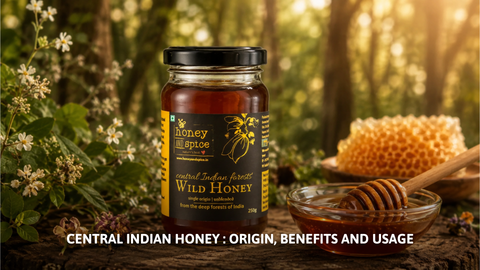
When people think of Indian honey, mountain varieties like Himalayan acacia or valley apple blossom often steal the spotlight. However, deep within the heart of the subcontinent lies one of India’s richest and most complex floral treasures: Central Indian honey. Sourced from the dense, biodiverse deciduous forests and plateau landscapes of Madhya Pradesh, Chhattisgarh, and Maharashtra, this wild, raw nectar offers a distinctively bold, dark, and earthy character.
Whether you want to discover the unique benefits of Central Indian Honey, explore creative Central Indian multifloral honey recipes, or integrate smart natural sweetener swaps into your daily wellness routine, this comprehensive guide covers everything you need to know.
What Makes Central Indian Honey Special?
Central India is home to iconic forest belts like Kanha, Satpura, Bandhavgarh, and Achanakmar. In these undisturbed natural reserves, wild honeybees (Apis dorsata) forage freely across a dense canopy of medicinal flora, including Mahua, Sal, Palash (Flame of the Forest), Jamun, Neem, and wild forest herbs.
Central India vs North India Honey: The Multifloral Nectar Comparison
Understanding the difference in terroir helps explain why Central Indian honey stands out in taste, texture, and nutrient density.
| Parameter | Central India Multifloral Honey | North India Honey |
| Floral Source | Dense forest multifloral nectar (Mahua, Sal, Palash, Neem, Jamun) | Temperate orchards & agricultural fields (Mustard, Acacia, Apple Blossom) |
| Flavor Profile | Deep, dark, earthy, slightly woody with warm caramelised notes | Light, delicate, crisp, bright floral or fruity sweet |
| Texture & Color | Viscous, dense, dark amber to deep mahogany | Pale golden, light amber, smooth and runny |
| Mineral Density | Abundant in iron, magnesium, and complex polyphenols from wild flora | High in natural fructose and light floral enzymes |
Types of Central Indian Honey & Their Health Benefits
Central India's diverse landscapes, ranging from dense teak and deciduous forests to sprawling orchards, produce distinct varieties of honey, each carrying unique floral notes and targeted health benefits.
- Central Indian Wild Honey (Multifloral): Harvested from wild forest blooms like Mahua, Sal, and Palash, this dark nectar acts as a multi-benefit superfood that strengthens overall immunity and boosts daily digestion.
- Jamun Honey: Sourced from short-lived Jamun tree blossoms, this dark, woody-tasted honey naturally helps support sugar metabolism and regulates digestive functions.
- Wild Berry Honey (Jujube / Sidr): Collected from wild Ber blossoms in dry forest zones, this rich amber honey excels at soothing throat irritation, boosting stamina, and promoting skin health.
- Neem Honey: Harvested from bitter-sweet Neem tree blossoms, this medicinal honey offers powerful anti-inflammatory and blood-purifying properties.
- Lychee Honey: Sourced from fragrant lychee orchards in the region, this light, fruity-sweet honey provides quick, clean energy and digestive comfort.
- Moringa Honey: Collected from delicate drumstick tree flowers, this warm, nutty honey delivers essential trace minerals and rich antioxidants to reduce bodily fatigue.
- Sweet Cliff Honey: Harvested from wild nests hanging high on forest cliffs, this rare nectar provides potent antimicrobial defence and deeply warms the respiratory system.

Health Benefits of Central Indian Honey
The raw, unpasteurised nature of wild forest honey ensures that all heat-sensitive enzymes, trace minerals, and bioflavonoids remain intact.
- Rich in Bioactive Antioxidants: Because bees collect multifloral nectar from wild medicinal trees like Neem, Sal, and Palash, Central Indian honey contains high concentrations of phenolic compounds that combat cellular oxidative stress.
- Natural Immunity & Digestive Support: Incorporating raw forest honey into your daily wellness routine helps stimulate digestive enzymes, soothe gut inflammation, and support natural metabolic function.
- Respiratory Cleansing: The antimicrobial properties of wild forest honey make it an effective remedy for soothing sore throats, clearing morning phlegm, and easing seasonal coughs.
Central Indian Multifloral Honey Uses in Your Daily Wellness Routine
Thanks to its complex, bold flavour profile, Central Indian multifloral honey uses go far beyond standard sweetening.
Daily Wellness Uses:
- Morning Detox Drink: Stir a spoonful of raw forest honey into warm water with fresh lemon juice to activate digestion and boost immunity.
- Herbal Teas: Use as a natural sweetener swap for refined sugar in ginger, tulsi, or green tea to complement warm herbal spices.
- Breakfast Bowls: Drizzle over chia seed pudding, warm oatmeal, or Greek yoghurt for sustained energy throughout the morning.
- Morning Warm Tonic: Start your day by stirring a spoonful of raw forest honey into warm water with a dash of fresh lemon juice or organic apple cider vinegar to activate digestion.
- Infusing Herbal Teas: Replace refined sugars in spicy herbal teas (like Tulsi-Ginger, Kadha, or Chamomile). The earthy notes of Central Indian honey complement warm herbal spices perfectly.
- Elevating Breakfast Bowls: Drizzle raw forest honey over morning breakfast bowls, including rolled oats, parfait, Greek yoghurt, or smoothie bowls, for sustained energy throughout the morning.

Delicious Central Indian Honey Recipes
If you want to bring wild forest flavour into your kitchen, try these simple, wholesome Central Indian Honey Recipes:
1. Honey-Glazed Roasted Root Vegetables
Elevate carrots, sweet potatoes, and beets with a savoury-sweet glaze.
- Ingredients: 2 cups chopped root vegetables, 1 tbsp olive oil, 2 tbsp Central Indian multifloral honey, 1 tsp cumin powder, a pinch of sea salt, and cracked black pepper.
- Instructions: Toss vegetables with olive oil, salt, and cumin. Roast at 200°C (400°F) for 20 minutes. Drizzle the raw honey over the warm roasted veggies right before serving to preserve its live enzymes.

2. Spiced Forest Honey & Citrus Marinade
Use this rich marinade for grilled paneer, tofu, or roasted vegetables.
- Ingredients: 3 tbsp Central Indian honey, 2 tbsp fresh lime juice, 1 tbsp cold-pressed mustard oil, 1 crushed garlic clove, and 1/2 tsp red chilli flakes.
- Instructions: Whisk all ingredients together until smooth. Coat your protein or vegetables and allow them to marinate for 30 minutes before grilling.

Smart Natural Sweetener Swaps for Healthy Baking
Making natural sweetener swaps in your kitchen is one of the easiest ways to eliminate processed white sugar while enhancing food flavour.
- Healthy Baking Ratio: When replacing white sugar with Central Indian honey in healthy baking (such as whole wheat muffins, banana bread, or oat cookies), replace 1 cup of sugar with 3/4 cup of honey.
- Liquid Adjustment: Reduce other liquids in the recipe by 2 tablespoons for every cup of honey used.
- Oven Temperature: Lower your baking temperature by roughly 10°C (15°F) to prevent excessive browning, as raw natural honey caramelises faster than refined sugar.
NMR-Tested Central Indian Wild Honey by Honey and Spice
When sourcing pure forest nectar, scientific verification is just as important as traditional harvesting. Honey and Spice leads the industry with its NMR-tested Central Indian Wild Honey, offering 100% raw, unpasteurised nectar harvested sustainably by indigenous tribal honey hunters from the wild beehives (Apis dorsata) of Central India's forest belts.
Every batch undergoes Nuclear Magnetic Resonance (NMR) testing, the global gold standard for detecting honey adulteration, added sugar syrups, or thermal processing, ensuring you receive nature’s superfood exactly as the bees made it.
Key Reasons & Benefits of Consuming NMR-Tested Central Indian Wild Honey:
- 100% Guaranteed Purity: Advanced NMR testing provides scientific proof that the honey is free from rice syrup, high-fructose corn syrup, or hidden additives.
- Ethically Sourced & Bee-Friendly: Harvested by traditional indigenous forest communities using sustainable methods that preserve natural bee habitats and support tribal livelihoods.
- Zero Thermal Processing: Completely raw and unheated (kept under 45°C), preserving natural enzymes (diastase and invertase), beneficial pollen, and propolis.
- Potent Natural Antioxidant Boost: Protects your cells against oxidative stress, helps strengthen natural immunity, and promotes healthy, youthful skin.
- Enhanced Digestive & Metabolic Health: Bioactive enzymes act as a natural digestive tonic, soothing the stomach lining and promoting nutrient absorption.
- Sustained Energy Source: Provides clean, natural energy without triggering sharp glucose spikes or crashes associated with processed sugars.
Also read more about NMR testing and what makes NMR-tested honey different from the ones in the market from our blog :
Conclusion
Embracing Central Indian honey allows you to enjoy wild, unrefined forest nectar while supporting your health with natural antioxidants and essential minerals. Whether used in warm herbal teas, drizzled over breakfast bowls, or incorporated into savoury marinades and healthy baking, this dark, multifloral honey brings authentic natural goodness to your kitchen.
FAQs
Q1. What makes Central Indian honey different from regular honey?
Central Indian honey is sourced from wild biodiverse deciduous forests, making it multifloral, dark, earthy and rich in bioactive antioxidants compared to processed or single-flower honeys.
Q2. Is Central Indian wild honey good for daily consumption?
Yes, raw wild forest honey is an excellent daily addition. It helps boost natural immunity, supports digestion, and provides a clean source of sustained energy without processed sugars.
Q3. What are the best ways to use raw forest honey in cooking?
You can drizzle it over breakfast bowls, use it as a natural sweetener in herbal teas, create sweet and savoury marinades for grilling or substitute it for refined sugar in healthy baking.
Q4. Does Central Indian multifloral honey expire?
Pure raw honey never truly expires. Its low moisture content and natural acidity prevent bacteria from growing, though it may crystallise over time, which is a sign of high quality.
Q5. What is NMR-tested honey?
Nuclear Magnetic Resonance testing is the global gold standard for analysing honey purity. It ensures the honey is completely raw, unpasteurised, and free from added sugar syrups or adulteration.
Q6. Can I replace white sugar with wild honey in baking?
Yes, you can substitute one cup of white sugar with 3/4 cup of wild honey. You should also reduce the recipe liquids by two tablespoons and lower the baking temperature slightly.
Q7. Which type of Central Indian honey is best for sore throats?
Wild Berry and Sweet Cliff honey are highly recommended for soothing throat irritation as they contain potent antimicrobial properties that warm and protect the respiratory system.