सामग्री पर जाएं

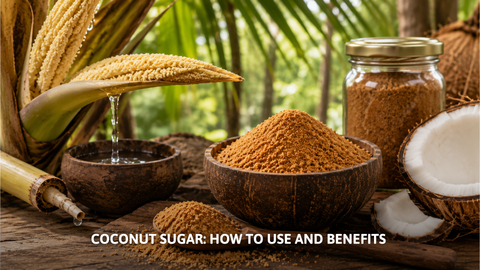
Over the past few years, coconut sugar has emerged as one of the most popular unrefined natural sweeteners on pantry shelves worldwide. Derived directly from the floral sap of the coconut palm tree, this golden-brown sweetener offers a rich, caramel-like flavour that closely mirrors dark brown sugar. But beyond its delicious taste, health-conscious bakers and home cooks are switching to explore the unique health benefits of coconut sugar as a superior replacement for heavily processed white sugar.
Whether you want to learn about the benefits of coconut sugar, understand how unrefined sugar works in your body, or discover practical tips for baking with coconut sugar and creating healthy coconut sugar recipes, this ultimate guide covers everything you need to know.
What is Coconut Sugar? Extraction and Processing
Understanding how to use coconut sugar starts with knowing how it is made. Unlike standard white table sugar, which undergoes intensive industrial chemical refining, sulfur bleaching, and high-heat centrifugation, coconut sugar remains a minimally processed, whole food sweetener.
Coconut Sugar Production Process:
-
Fresh Coconut Blossom Sap
- Gentle Evaporation & Heating → Thick Caramelised Nectar
-
Dehydration & Hand Sieving → Unrefined Granulated Coconut Sugar
Farmers climb coconut palm trees (Cocos nucifera) and make careful incisions into the unopened flower buds to collect sap. Once harvested, the fresh sap is boiled gently over moderate heat to evaporate its water content. As the moisture disappears, it transforms into a thick syrup that solidifies and crystallises into rich brown granules. Because no artificial chemicals, bleaches, or synthetic preservatives are used, all the natural vitamins, minerals, and plant compounds from the sap remain intact.

Top Health Benefits of Coconut Sugar: Why Unrefined Sugar Matters
When evaluating coconut sugar advantages, it becomes clear why nutritionists prefer this unrefined sugar over traditional refined cane sugar.
| Health Parameter | Refined White Sugar | Organic Coconut Sugar |
| Glycemic Index (GI) | High (GI ~65–70) | Low to Moderate (GI ~35–54) |
| Nutritional Profile | "Empty calories" (0% vitamins or minerals) | Contains Iron, Zinc, Calcium, Potassium, and Antioxidants |
| Prebiotic Fiber Content | 0% Fiber | Rich in Inulin Prebiotic Fiber |
| Fructose Ratio | High (~50% free fructose) | Lower Free Fructose Content |
| Processing Level | Heavily refined, sulfur-bleached | Minimally processed, chemical-free |
1. Lower Glycemic Index and Blood Sugar Control
One of the primary coconut sugar benefits is its relatively low Glycemic Index (GI ~35–54), compared to refined sugar (GI ~65–70). A lower GI means that coconut sugar releases glucose into your bloodstream at a slower, more gradual pace, helping to minimise sharp insulin spikes and the energy crashes associated with refined sweets.
2. Rich in Inulin Prebiotic Fibre
The secret behind coconut sugar's slow glucose absorption is inulin, a soluble prebiotic fiber found naturally in coconut palm sap. Inulin not only slows down carb digestion in your stomach but also feeds the beneficial bacteria (Bifidobacteria) in your gut microflora, supporting healthy digestion and systemic immune function.
3. Mineral and Antioxidant Retention
Refined table sugar is stripped of all micronutrients during processing, offering only empty calories. In contrast, unrefined coconut sugar retains key trace minerals:
- Iron & Zinc: Support healthy blood production, cell growth, and immune defence.
- Potassium & Magnesium: Help balance electrolytes and maintain proper blood pressure levels.
- Polyphenols & Antioxidants: Help neutralise harmful free radicals in the body.
How to Use Coconut Sugar in Daily Cooking & Baking
Learning how to use coconut sugar in your kitchen is remarkably straightforward. Because it comes in granulated form, it serves as an easy alternative in both daily drinks and gourmet cooking.
Simple 1:1 Substitution Rule
In almost any drink, sauce, or everyday meal, coconut sugar can be substituted for white or brown sugar in a 1:1 ratio:
- Coffee & Teas: Add 1 teaspoon of coconut sugar to hot coffee, chai, or matcha for a subtle toasted caramel note.
- Breakfast Bowls: Sprinkle over warm oatmeal, chia seed puddings, or yoghurt bowls for natural sweetness and a delicate crunch.
- Savoury Dishes: Balance out spice and acidity by adding a tablespoon of coconut sugar to stir-fry sauces, marinades, salad dressings, or curries.

Baking with Coconut Sugar: Tips for Success
When baking with coconut sugar, you can easily swap it into most traditional cake, muffin, or cookie recipes. However, keep these simple adjustments in mind to achieve perfect results:
- Caramel & Molasses Flavour Profile: Coconut sugar does not taste like coconut fruit; instead, it offers a deep caramel, butterscotch-like flavour similar to light or dark brown sugar. It works exceptionally well in chocolate brownies, banana bread, gingerbread, and spice cakes.
- Moisture Control: Coconut sugar absorbs liquid slightly faster than white table sugar. If your dough feels dry, add an extra tablespoon of milk, plant-based liquid, or melted butter.
- Baking Colour: Because coconut sugar is naturally dark brown, your baked goods will take on a rich, golden-brown hue. Keep this in mind when making light-colored cakes or pale butter cookies.
- Melting & Creaming: Granules of coconut sugar are slightly coarser than fine castor sugar. When creaming butter and coconut sugar together for cookies, beat the mixture for an extra 1–2 minutes to allow the sugar granules to melt smoothly.

Delicious Coconut Sugar Recipes to Try at Home
If you want to start making healthy desserts, try these easy coconut sugar recipes:
Healthy Dessert Ideas:
- Coconut Sugar Chocolate Chip Cookies: Replace regular brown sugar with coconut sugar for a 1:1 swap that delivers crisp edges and a chewy centre.
- Roasted Cinnamon Apple & Oatmeal Bake: Top warm apples and rolled oats with a generous sprinkle of coconut sugar to create a rich caramel glaze.
- Dark Chocolate Avocado Mousse: Blend ripe avocados, cocoa powder, and melted coconut sugar granules for a smooth, guilt-free chocolate treat.
1. Chewy Coconut Sugar Chocolate Chip Cookies
Swap out regular brown and white sugar for 100% organic coconut sugar. The coconut sugar caramelises beautifully during baking, creating crisp edges, a soft, chewy centre, and a rich butterscotch undertone that pairs perfectly with dark chocolate chips.
2. Cinnamon Apple Oat Bake
Combine rolled oats, warm cinnamon, chopped apples, almond milk, and a generous sprinkle of coconut sugar. Bake at 180°C (350°F) for 25 minutes, until the sugar melts into a warm, gooey caramel glaze over the fruit.
3. Dark Chocolate Avocado Mousse
Scoop the flesh of 2 ripe avocados into a food processor or blender. Add 1/4 cup of unsweetened cocoa powder, 1/4 cup of warm milk (or almond milk), a pinch of sea salt, 1 teaspoon of vanilla extract, and 1/3 cup of finely ground coconut sugar. Blend on high until completely silky and smooth. Chill in the refrigerator for 30 minutes before serving for a rich, antioxidant-dense chocolate mousse.

Conclusion
Understanding the core coconut sugar benefits makes it easy to see why this unrefined natural sweetener is a superior staple for modern kitchens. By switching to coconut sugar, you enjoy lower glycemic impact, prebiotic gut support, and essential trace minerals, all while enjoying a rich caramel taste in your favourite drinks, meals, and baked treats.
FAQs
Q1. Is coconut sugar healthier than white sugar?
Yes, it is less processed and retains trace minerals like iron and zinc, plus it has a lower glycemic index which helps prevent sudden blood glucose spikes.
Q2. Can I substitute coconut sugar for brown sugar in baking?
Absolutely. You can use a one to one ratio when replacing brown sugar in cookies and cakes, yielding a similar caramel flavor.
Q3. Does coconut sugar taste like real coconut?
No, it actually has a deep caramel and butterscotch flavor profile that is very similar to traditional brown sugar.
Q4. Is coconut sugar safe for diabetics?
While it has a lower glycemic index than regular sugar, it still contains calories and carbohydrates, so it should be consumed in moderation after consulting a doctor.
Q5. Does coconut sugar dissolve well in cold drinks?
The granules are slightly coarser than standard sugar, so it dissolves best in hot beverages like coffee or tea, but you can blend it for cold drinks.
Q6. How long does coconut sugar last in the pantry?
When stored in an airtight container in a cool and dry place, it can easily last for up to two years without losing its quality.
Q7. Is coconut sugar considered vegan?
Yes, it is entirely plant based and does not undergo the bone char filtering process often used for refined white sugar.