सामग्री पर जाएं

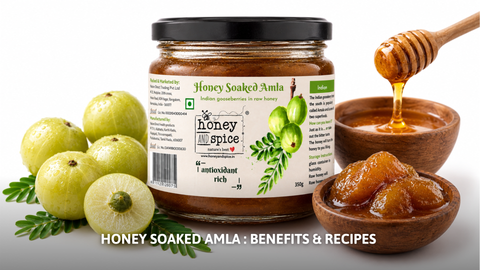
In the world of natural wellness, few traditional remedies hold as high a status as honey-soaked amla. Known in Ayurveda as Amalaki, the Indian gooseberry in raw honey creates a synergistic blend that turns a sharp, astringent superfood into a delicious, nutrient-dense daily tonic.
Whether you are looking to replace synthetic supplements, enhance your immune health, or build a rejuvenating morning habit, combining pure honey-soaked amla into your daily routine offers remarkable holistic benefits.
The Science of Honey & Amla in Ayurveda
In classical Ayurvedic texts, Amla is praised as a Rasayana, a rejuvenator that promotes longevity, enhances digestion, and nourishes all bodily tissues (Dhatus). However, raw amla has a strong sour and astringent taste (Rasa) that can be harsh on an empty stomach for some individuals.
This is where honey (Madhu) plays a crucial role:
- Yogavahi (Catalyst): Ayurveda classifies raw honey as a Yogavahi, a carrier agent that enhances the bioavailability of the herb or fruit it is paired with, carrying its healing properties deeper into the tissues.
- Dosha Balancing: Amla balances all three Doshas (Vata, Pitta, and Kapha), particularly cooling excess Pitta. Honey, with its natural warming energy (Ushna Virya), balances Kapha and counteracts the intense cold/sour nature of amla without neutralising its Vitamin C content.
- Natural Preservation: Honey acts as a natural bio-preservative through low moisture content and osmotic pressure, locking in the active antioxidants of fresh gooseberries for months without artificial additives.
Core Health Benefits: Why You Should Eat Honey-Soaked Amla
The key amla soaked in honey benefits stem from the high concentration of natural Vitamin C, polyphenols, flavonoids, and active enzymes present in this combination.

1. Robust Immune Defence
A single fresh amla contains up to 20 times more Vitamin C than an orange. When submerged in raw honey, these delicate antioxidants remain stable and protected against thermal breakdown, providing natural daily protection against seasonal colds and infections.

2. Comprehensive Digestive Support
If you suffer from acidity, hyperacidity, or sluggish bowel movements, eating honey-soaked amla in the morning offers gentle digestive support. Amla stimulates digestive fire (Agni) while honey calms the stomach lining, promoting optimal nutrient absorption and liver function.

3. Hair and Skin Radiance
The potent polyphenols in Indian gooseberry in raw honey combat oxidative damage, preventing premature hair greying, strengthening hair follicles, and promoting a natural radiant skin glow.

Honey-Soaked Amla vs Amla Juice
A common query among health enthusiasts is how whole honey-soaked amla vs amla juice compare when choosing daily supplements.
| Feature | Honey Soaked Amla | Fresh Amla Juice |
| Taste Profile | Sweet, pleasantly tart, chewable | Harsh, highly sour, astringent |
| Fiber Content | Retains 100% natural dietary fiber | Fibre is lost during extraction |
| Digestive Impact | Gentle on empty stomach due to raw honey | Can cause acidity in sensitive stomach |
| Shelf Life | Months (via natural preservation) | 1 to 2 days (oxidizes rapidly) |
| Child-Friendly | Perfect honey soaked amla for kids | Difficult for picky eaters to accept |
While fresh amla juice provides a fast dose of antioxidants, whole honey-soaked amla offers a balanced, chewable alternative that preserves natural fibre and avoids gastric distress.

Honey-Soaked Amla for Kids and Picky Eaters
Getting children to eat raw amla is often a challenge due to its puckering sourness. Converting raw gooseberries into sweet, sticky natural treats makes honey-soaked amla for kids an easy win.
- Palatable & Tangy: The slow soaking process draws out bitterness and infuses the fruit with raw honey sweetness, creating a jam-like bite that even picky eaters enjoy.
- Pill-Free Immunity: It acts as a delicious alternative to chewable Vitamin C tablets or artificial candy snacks.
Traditional Honey Soaked Amla Recipe
Making your own jar at home is simple and requires only two primary ingredients.
Ingredients & Equipment
- Fresh Amla (Indian Gooseberry): 500g (firm, unblemished, medium-sized)
- Raw Unpasteurized Honey: 400ml - 500ml (sufficient to submerge the fruit completely)
- Sterilised Glass Jar: Clean, dry glass jar storage container with an airtight lid
Step-by-Step Instructions
- Clean & Thoroughly Dry: Wash the fresh amlas in water. Wipe every single piece with a clean cloth and air-dry completely. Any residual moisture will cause fermentation or spoilage.
- Prick or Slice: Prick each amla all over using a stainless steel fork or toothpick. Alternatively, cut them into small, deseeded wedges for faster honey absorption.
- Steam Gently (Optional): Steam the whole amlas for 5–7 minutes to soften slightly, then air-dry completely under sunlight or a fan for 2 hours.
- Layer in Glass Jar: Place the dry amlas into your glass jar.
- Pour Pure Honey: Pour the raw honey slowly over the amlas until every piece is completely submerged beneath a layer of honey.
- Sun Curing: Seal the jar tightly and place it near a sunlit window for 7 to 12 days. Shake or stir gently with a dry wooden spoon once every day.
- Ageing Process: Over 1–2 weeks, the amlas will shrink, release natural juices into the honey, turn soft, and transform into golden, translucent natural treats.
How to Store & Shelf Life Guidance
Understanding how to store honey-soaked amla properly guarantees freshness and longevity:
- Container Choice: Always use a dark or clear glass jar for storage. Avoid plastic or metal containers, as the acidic nature of amla can react with metal lids or leach chemicals from plastics.
- Storage Location: Store the jar in a cool, dry place away from moisture and direct sunlight after the initial sun-curing phase.
- Utensil Care: Always use a completely dry wooden or ceramic spoon to scoop out pieces. Moisture introduced into the jar will spoil the batch.
- Expected Shelf Life: The shelf life of honey-soaked amla ranges from 6 months to 1 year at room temperature when kept free from water contamination.

Quality Indicators for Buying Commercial Jars
If you are purchasing pre-made jars instead of making your own, look for these quality indicators to select the best honey-soaked amla:
- No Refined Sugar/Syrup: Ensure the label lists raw wild honey without corn syrup, invert sugar, or added caramel colour.
- Whole or Large Segments: High-grade products use intact gooseberries or large wedges rather than processed pastes.
- Natural Consistency: The liquid surrounding the fruit should be thin to medium viscosity, reflecting natural honey diluted slightly by the fruit's own juices.
Creative Amla and Honey Combinations & Serving Ideas
Beyond enjoying a single piece directly from the jar every morning, try these versatile amla and honey combinations:
- Warm Morning Elixir: Stir 1 tablespoon of the infused amla-honey syrup into a glass of lukewarm water with a pinch of black pepper for an invigorating morning detox drink.
- Wellness Yoghurt Bowl: Chop one honey-soaked amla piece and fold it into plain Greek yoghurt alongside nuts and seeds.
- Spiced Herbal Tea Infusion: Add a spoonful of honey-soaked amla syrup to warm green tea or tulsi tea for an antioxidant boost.

Start Your Morning Habit Today
Incorporating eating honey soaked amla in the morning on an empty stomach provides a clean energy lift, supports daily detoxification, and strengthens natural immunity. Simple to make, sweet to taste, and deeply rooted in Ayurvedic wisdom, this golden preserve remains one of nature's finest remedies for everyday health.
FAQs
Q1. What are the benefits of eating honey-soaked amla on an empty stomach?
Eating it on an empty stomach helps maximize nutrient absorption, stimulates digestive fire, and provides a gentle detox for the liver and digestive tract.
Q2. How long should amla be soaked in honey before eating?
For the best results, fresh amla should be soaked in raw honey and sun-cured for about 7 to 12 days until the fruit softens and releases its juices.
Q3. Can we store honey-soaked amla in a plastic container?
No, it is highly recommended to store it in a sterilised glass jar. The acidic nature of amla can react with plastic or metal containers over time.
Q4. Does honey-soaked amla expire or go bad?
When prepared without moisture and stored in a clean, dry glass jar using pure honey, it acts as a natural preservative and can last 6 months to a year.
Q5. Is it safe to eat honey-soaked amla every day?
Yes, consuming one or two pieces of honey-soaked amla daily is a safe and beneficial Ayurvedic practice for boosting immunity and overall wellness.
Q6. How is honey-soaked amla different from amla murabba?
Traditional amla murabba is often boiled and preserved in a heavy refined sugar syrup, whereas this recipe uses pure, unheated raw honey to preserve the fruit's natural nutrients.
Q7. Can diabetic patients eat honey-soaked amla?
While honey is a natural sweetener, it still contains fructose. Diabetic individuals should consult their healthcare provider before adding it to their daily routine.