Skip to content

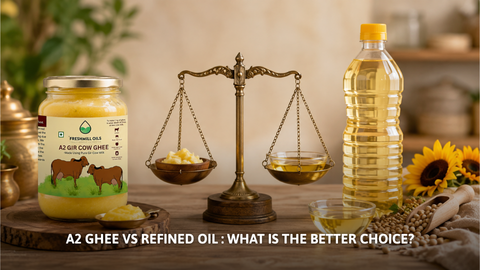
In modern nutrition and traditional Indian cooking, few debates are as heated as A2 Ghee vs Refined Oil. For decades, vegetable oils, seed oils, and processed cooking fats replaced clarified butter in everyday kitchens. They were marketed as "heart-healthy" alternatives low in saturated fat. However, modern nutritional science and ancient Ayurvedic wisdom are coming together, revealing a starkly different truth: highly processed seed and vegetable oils do far more harm than good.
If you have ever wondered whether ghee is better than refined oil, how A2 cow ghee vs sunflower oil compares in high-heat cooking, or how switching to cooking with A2 ghee instead of refined oil can transform your energy, digestion, and cardiovascular health, this complete guide covers every detail.
What is A2 Ghee? (The Bilona Method Explained)
To understand the health benefits of A2 Ghee compared to refined oil, we must first understand how authentic desi cow ghee is made.
Unlike commercial ghee or modern processed fats, authentic A2 cow ghee is derived exclusively from indigenous Indian cow breeds (such as Gir, Sahiwal, Red Sindhi, and Kankrej). These native cows naturally produce milk containing the A2 beta-casein protein, which is far easier on human digestion than the A1 protein found in hybridised or genetically modified foreign cattle breeds.
The Traditional Bilona Method vs. Factory Ghee
True A2 ghee is prepared using the ancient bilona method:
- Boiling: Whole, raw A2 cow milk is boiled.
- Curdling: The milk is converted into natural curd (yoghurt).
- Hand-Churning (Bilona): The curd is churned bidirectionally using a wooden churner (bilona) to separate pure maskan (butter) from buttermilk.
- Clarification: The butter is slowly heated over a low flame to evaporate moisture, leaving behind golden, aromatic, and nutrient-dense A2 bilona ghee.
This slow preparation preserves vital enzymes, fat-soluble vitamins (A, D, E, K), essential fatty acids, and omega fatty acids.

What is Refined Oil? (The Dark Reality Behind Seed Oils)
Refined oils, including refined sunflower oil, soybean oil, canola oil, rice bran oil, and generic vegetable oil alternatives, undergo an aggressive industrial extraction process.
How Refined Oils are Processed
- Chemical Extraction: Seeds are crushed and washed with toxic chemical solvents like hexane to extract every last drop of oil.
- Degumming & Neutralisation: The crude oil is treated with strong alkali chemicals (like sodium hydroxide) to clean out natural gums and waxes.
- Bleaching: The oil is bleached with bleaching earth or chemicals to remove natural colour and impurities.
- Deodorisation: High-heat deodorisation heats the oil above 200°C–240°C under a vacuum to strip away any raw smell and flavour.
This extreme processing destroys natural antioxidants, mutates delicate unsaturated fats, and produces toxic trans fats and lipid peroxides.

Deep Dive: Fatty Acid Profile Comparison
The foundational difference between A2 cow ghee vs sunflower oil or other seed oils lies in their structural chemical composition and fatty acid profile.
| Feature / Nutrient | Authentic A2 Cow Ghee (Bilona Method) | Commercial Refined Oil (Sunflower, Soybean, etc.) |
| Primary Fatty Acid Type | Short chain & Medium chain Saturated Fatty Acids (MCFAs) | Polyunsaturated Fatty Acids (PUFAs) |
| Beta Casein Protein | Pure A2 Protein (digestion friendly) | N/A (Processed fat) |
| Omega Fatty Acids Ratio | Balanced Omega 3 to Omega 6 ratio (~1:1 to 1:2) | Extremely high Omega 6 (up to 100:1), promoting systemic inflammation |
| Butyric Acid Content | Very High (Promotes gut health and immunity) | None |
| Trans Fats & Free Radicals | Zero when cooked properly | High due to chemical deodorisation & thermal oxidation |
| Smoke Point | Extremely High (~250°C / 482°F) | Medium to High (180°C to 230°C), breaks down easily |
| Digestibility | Fast, metabolised directly by the liver for energy | Slow, heavy, causes lipid buildup |
Why Is Refined Oil Bad for You? (Cons of Refined Oils)
When evaluating A2 ghee vs refined oil, it becomes clear why modern health experts advise cutting out processed vegetable oils:
- Pro-Inflammatory Omega-6 Excess: Most seed oils (sunflower, corn, soybean) are packed with Omega-6 fatty acids. While body functions require a balance of Omega-3 and Omega-6, modern diets rich in seed oils skew this ratio to a dangerous 1:20 or higher, triggering chronic tissue inflammation, joint pain, and metabolic dysfunction.
- Oxidative Stress & Free Radicals: Polyunsaturated fats (PUFAs) in refined oils have multiple fragile double bonds. Under high-heat traditional Indian cooking, these bonds break apart, forming free radicals, aldehydes, and acrylamide, compounds directly linked to cellular damage and accelerated ageing.
- Presence of Toxic Trans Fats: Heat and chemical hydrogenation during refining convert healthy cis-fatty acids into toxic trans fats, which raise LDL (bad) cholesterol and severely damage arterial walls.
- Nutrient Depletion: Solvent extraction strips away all natural vitamins, leaving behind empty, chemically modified calories
Health Benefits of A2 Ghee Compared to Refined Oil
Switching your daily cooking fat to desi cow ghee reaps immense physical and metabolic rewards.
The Traditional Bilona Method Workflow:
First, raw A2 milk is collected and boiled, which is then converted into natural curd (yoghurt). This curd is churned bi-directionally to extract pure A2 bilona ghee.
When consumed, this pure ghee goes directly through liver metabolism to provide your body with rapid energy. Structurally, the resulting ghee features an exceptionally high smoke point, is rich in gut-healing butyric acid, and maintains a perfectly balanced Omega-3 to Omega-6 ratio.
1. Superior Gut Health & Digestive Support
A2 ghee is nature's richest natural source of butyric acid. Butyric acid is a short-chain fatty acid that feeds the beneficial microflora in your gut, repairs damaged intestinal linings (helping with leaky gut syndrome), and eases digestive inflammation.
2. Promotes Heart Health
Contrary to old lipid-hypothesis myths, pure saturated fats from A2 cow ghee do not automatically cause heart attacks. A2 ghee boosts High-Density Lipoprotein (HDL) cholesterol, the good cholesterol that removes arterial plaque. Furthermore, because A2 ghee contains no toxic trans fats or oxidised aldehydes, it protects blood vessels from inflammatory lesions.
3. Ideal for High-Heat & Traditional Indian Cooking
Indian cuisine involves deep frying, tempering (tadka), and long sautéing. A2 ghee boasts an ultra-high smoke point of around 250°C (482°F). Unlike refined oils that smoke, burn, and release carcinogenic toxins, A2 ghee retains its structural stability under intense heat.
4. Direct Energy Source (Weight Management)
The short- and medium-chain fatty acids in A2 ghee do not circulate through the bloodstream to be stored as body fat. Instead, they travel straight to your liver to be converted into clean, immediate ketone energy, supporting weight loss and active metabolism.
5. High Nutrient Absorption
Vitamins A, D, E, and K are fat-soluble, meaning your body cannot absorb them without a healthy carrying fat. Sautéing vegetables in A2 ghee dramatically increases the bioavailability of essential vitamins and phytonutrients in your meal.
Pros & Cons Summary: At a Glance
A2 Ghee (Desi Cow Bilona Ghee)
Pros:
- Rich in butyric acid for gut healing.
- High smoke point (~250°C), making it the safest option for traditional Indian cooking.
- Completely natural, free from chemical solvents, hexane, and artificial bleaching.
- Rich in beneficial omega fatty acids and fat-soluble vitamins.
- Enhances food flavour with a traditional, rich aroma.
Cons:
- Higher cost due to labour-intensive bilona method production.
- Requires moderation for individuals with severe caloric restriction.
Refined Oil (Sunflower, Soybean, Seed Oils)
Pros:
Cheap and widely available.
Neutral flavour profile.
Cons:
- Chemically extracted using toxic solvents.
- High in pro-inflammatory Omega-6 fatty acids.
- Prone to oxidation, producing harmful free radicals and trans fats under high heat.
- Completely lacks butyric acid, vitamins, and gut-nourishing qualities.
How to Switch: Integrating A2 Ghee into Your Healthy Eating Routine
Transitioning to a healthy eating routine by swapping out refined oils is straightforward:
1. Replace Your Tadka: Instead of tempering mustard or cumin seeds in refined sunflower oil, use a single tablespoon of fragrant A2 cow ghee.

2. Baking & Sautéing: Use melted A2 ghee as a wholesome substitute for vegetable oil in baking or pan-searing proteins and vegetables.

3. Drizzle Over Warm Meals: Top your lentils (dal), steamed rice, or whole wheat flatbreads (rotis) with raw A2 ghee to lower the glycemic index of your carbohydrate intake.

4. Morning Bulletproof Coffee or Warm Water: Mix 1 teaspoon of A2 ghee with warm water or morning coffee to lubricate joints and kickstart gut motility.

Final Verdict: Is Ghee Better Than Refined Oil?
When comparing A2 ghee vs refined oil, the evidence is clear. Refined seed oils are industrial products that introduce systemic inflammation, oxidative stress, and toxic trans fats into the body. On the other hand, authentic bilona A2 cow ghee is a functional superfood packed with butyric acid, omega fatty acids, and essential nutrients.
By choosing to cook with A2 ghee instead of refined oil, you protect your heart, support your digestive system, and honour the time-tested nutrition of authentic traditional Indian cooking.
FAQs
Q1. Is A2 ghee healthier than refined oil?
Yes, pure A2 cow ghee is much healthier. Unlike refined oils that are chemically extracted and highly processed, bilona A2 ghee is rich in healthy fats, gut nourishing butyric acid, and essential fat soluble vitamins.
Q2. Can I use A2 ghee for deep frying?
Absolutely. A2 ghee boasts an ultra high smoke point of around 250 degrees Celsius. This makes it structurally stable for intense heat and traditional Indian cooking, whereas refined oils can smoke, burn, and release carcinogenic toxins.
Q3. Will consuming A2 ghee increase my cholesterol?
Consumed in moderation, authentic A2 bilona ghee promotes High Density Lipoprotein, which is the good cholesterol that removes arterial plaque. It protects blood vessels because it contains no toxic trans fats or oxidised aldehydes.
Q4. Does A2 ghee help with weight loss?
Yes, A2 ghee is rich in short and medium chain fatty acids. Instead of being stored as body fat, these travel straight to your liver to be converted into clean, immediate ketone energy, supporting weight loss and an active metabolism.
Q5. What exactly is the bilona method?
The Bilona method is a traditional process. Raw A2 milk is boiled and converted into natural curd. This curd is hand-churned bidirectionally to extract pure butter, which is then slowly heated to evaporate moisture, leaving behind nutrient-dense ghee.
Q6. Can I bake with A2 ghee instead of vegetable oil?
Yes, melted A2 ghee is a wholesome substitute for vegetable oil in baking or pan searing. It retains its natural antioxidants and avoids the pro-inflammatory Omega 6 excess found in modern refined seed oils.
Q7. How does A2 ghee improve gut health?
A2 ghee is nature's richest natural source of butyric acid. This short-chain fatty acid feeds beneficial microflora, repairs damaged intestinal linings, and eases digestive inflammation.