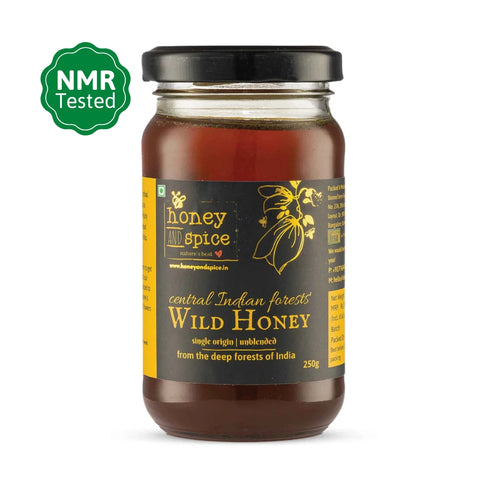
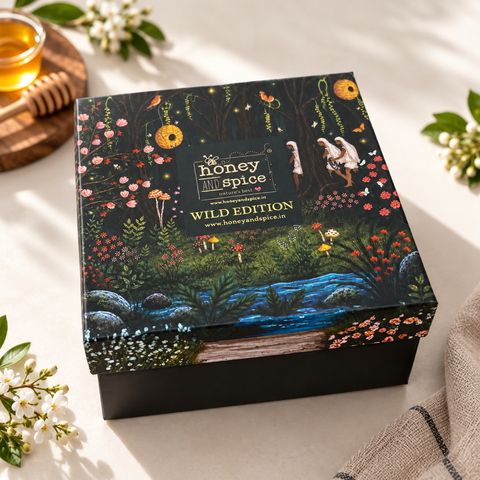
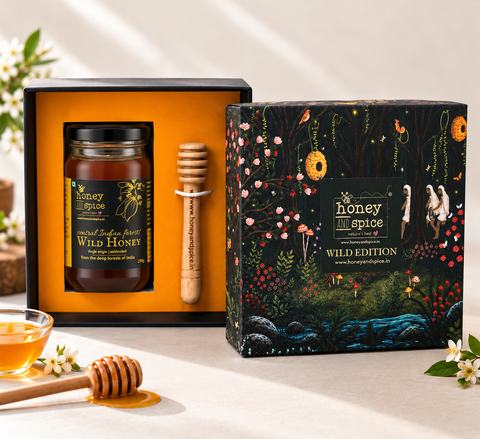
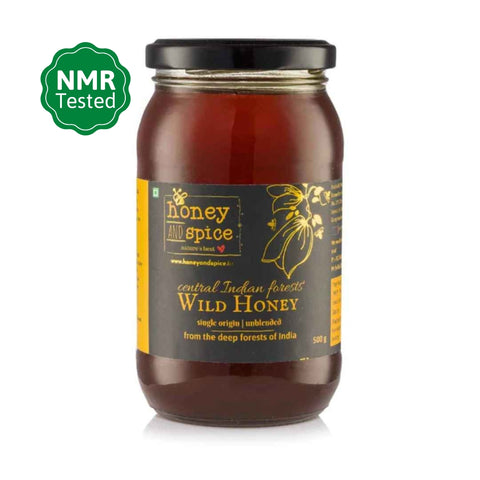
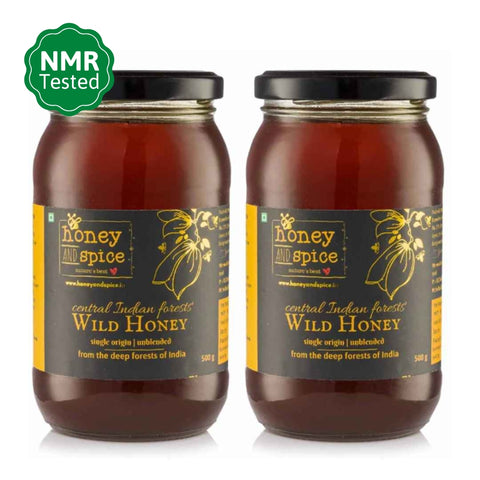
Central Indian Wild Honey- NMR Tested Honey

Quantity
 
Tax included. Shipping calculated at checkout.
Rs. 320.00 MRP (Incl. of all taxes)
 

Short Description

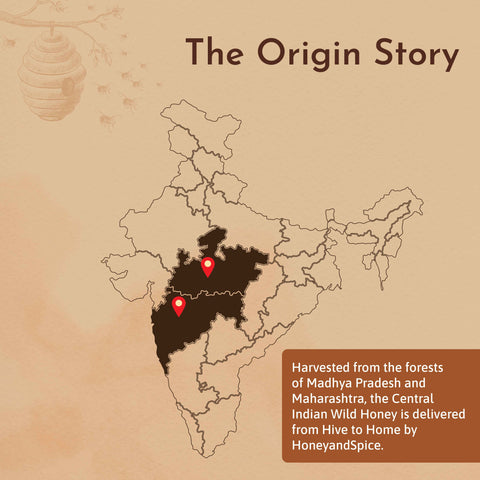
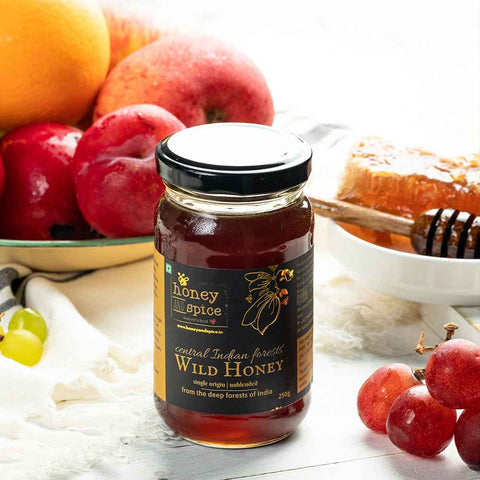
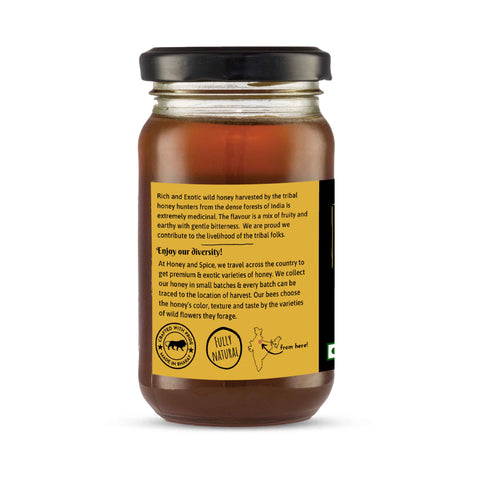
Journey into the dense forests of Madhya Pradesh and Maharashtra, where giant Apis dorsata bees forage on wild forest blooms to create this rich amber honey.

Now NMR-tested for purity, our Central Indian Wild Honey gives you scientific assurance of what nature already perfected, 100% raw, unprocessed, and free from sugar syrups or adulteration.

Sustainably harvested by indigenous tribal honey hunters, this wildflower honey carries the bold, earthy sweetness of Central India’s forests along with naturally occurring antioxidants, enzymes, and pollen.

A robust everyday honey for immunity, digestion, and clean natural energy, now backed by lab-verified purity proof.

Why NMR-Tested Matters

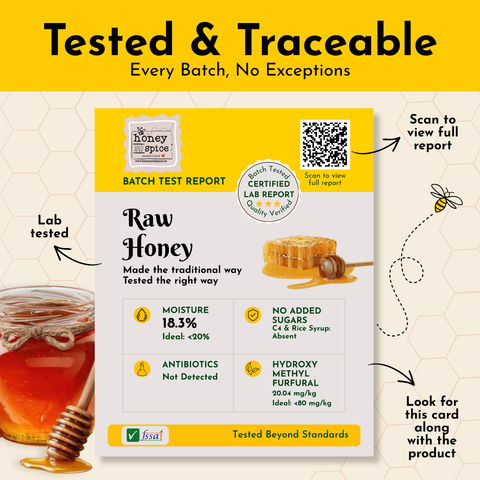
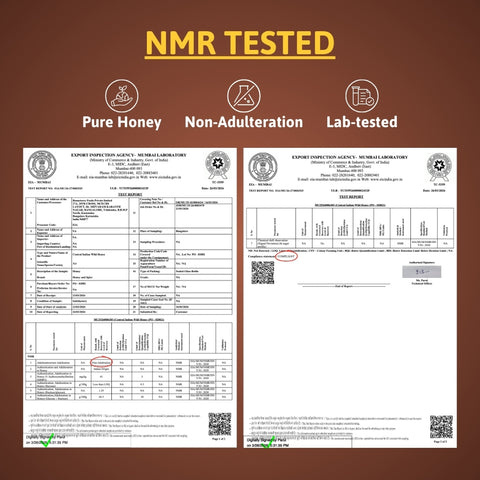
NMR Tested for Purity – Every batch is verified using Nuclear Magnetic Resonance testing, one of the most advanced methods used globally to detect adulteration in honey.

Key Features of Central Indian Wild Honey


Feature Details

Purity Standard

NMR-tested and lab verified for zero adulteration.

Geographic Origin

Dense forests of Madhya Pradesh and Maharashtra, known for their diverse flora and fauna.
Floral Source Nectar from a variety of wildflowers unique to the central Indian forests.
Bee Species Apis Dorsata (Giant Honeybee), known for building large hives on cliffs and tall trees.
Color & Appearance A rich amber hue that reflects its wildflower origins and unprocessed purity.
Taste & Flavor Profile A harmonious blend of floral sweetness with subtle earthy undertones, offering a robust flavor.
Batch Size 750 Kgs.
Harvesting Season Harvested during the optimal blooming periods of central India’s wildflowers.


Storage Instructions

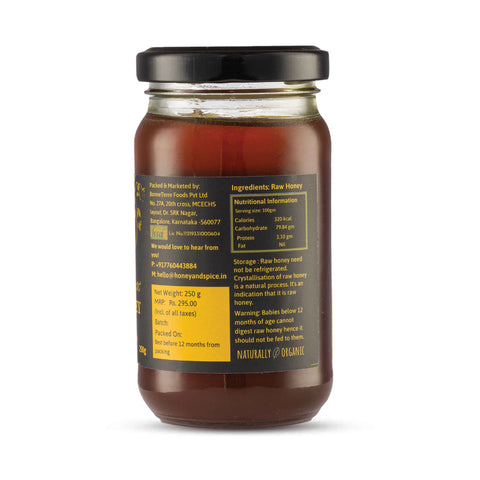
Store in a cool, dry place away from direct sunlight. Keep the lid tightly closed after each use to maintain its natural aroma and nutrients.


SHELF LIFE: 12 MONTHS

COUNTRY OF ORIGIN - INDIA


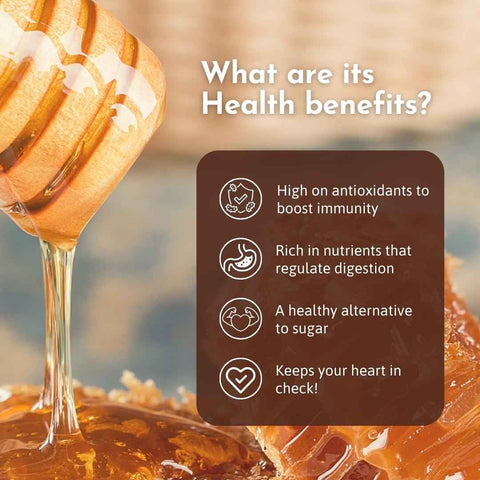
Our Central Indian Wild Honey is more than a sweetener; it’s a superfood celebrated for its incredible health benefits:

✔ Rich in Antioxidants: Protects against oxidative stress, improving cell health and reducing signs of aging.

✔ Boosts Immunity: Loaded with enzymes and nutrients, this raw organic honey strengthens your body’s defenses.

✔ Supports Digestion: Contains natural enzymes that aid in nutrient absorption and soothe the digestive system.

✔ Promotes Healing: Antibacterial properties help heal wounds, scars, and skin irritations effectively.

✔ Natural Sweetener: A healthier alternative to refined sugars, perfect for daily use.

This pure honey is versatile and perfect for daily use:

✔ Drizzle over pancakes, ice cream, or salads for a touch of natural sweetness.

✔ Blend into milkshakes, smoothies, or warm lemon water for a refreshing and healthful drink.

✔ Use in marinades, salad dressings, or desserts to enhance flavors.

✔ Enjoy a spoonful directly as a quick, natural energy boost.

Here’s why our Central Indian Wild Honey stands out:

✔ NMR-Tested Purity Guarantee – Trust backed by advanced scientific testing.

✔ Wild Forest Sourced – Collected from untouched Central Indian forests rich in medicinal flora.

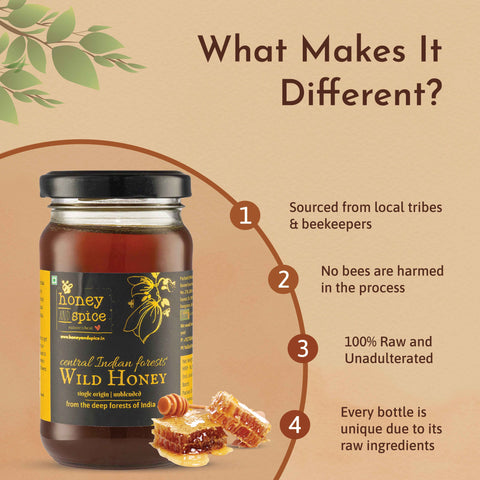
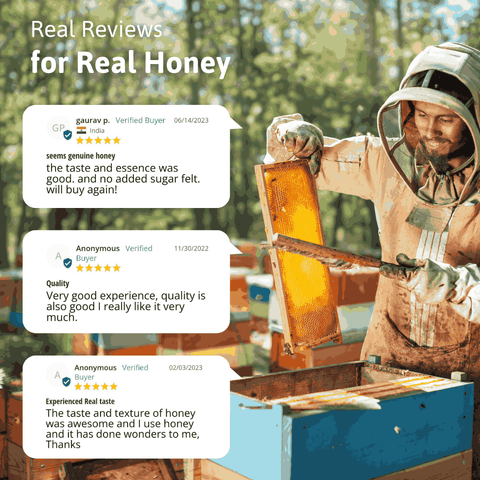
✔ Ethically Harvested – Tribal honey hunters use sustainable, bee-friendly traditional methods.

✔ No Heat, No Processing – Preserves enzymes, antioxidants, and natural pollen.

✔ Supports Tribal Livelihoods – Every purchase directly supports indigenous forest communities.

Our raw organic honey is carefully bottled to preserve its freshness and quality. Each jar comes with a shelf life of 12 months, ensuring you enjoy its benefits and flavor at your convenience.

We aim to deliver your jar of Central Indian Wild Honey within 5–7 business days. Each jar is securely packaged to ensure it reaches you in perfect condition.

Frequently asked questions

What makes Central Indian Wild Honey different from regular honey?
Central Indian Wild Honey is a raw, multifloral forest honey harvested from wild Apis dorsata beehives in the forests of Madhya Pradesh and Maharashtra. The bees forage naturally across diverse forest blooms, giving the honey its rich amber colour and bold, earthy sweetness. Unlike this brand’s other wild honeys, this SKU is also NMR-tested for purity.
What does NMR-tested honey mean?
NMR stands for Nuclear Magnetic Resonance, an analytical technique used to examine the chemical profile of honey and help assess its authenticity. NMR profiling can help detect certain added sugar syrups and other compositional anomalies that may indicate adulteration. Honey & Spice uses NMR testing as an additional purity check for its Central Indian Wild Honey.
Is every batch of Honey & Spice Central Indian Wild Honey NMR-tested?
Central Indian Wild Honey undergoes NMR testing before being offered as NMR-tested honey. The testing is used to check the honey’s composition and help identify adulteration such as added sugar syrups.
Where does Central Indian Wild Honey come from, and which bees produce it?
Central Indian Wild Honey is sourced from the dense forests of Madhya Pradesh and Maharashtra and is collected from wild beehives of Apis dorsata, commonly known as the Giant Honeybee. These bees forage across the diverse flowering vegetation found in Central India's forest landscape.
Is Central Indian Wild Honey monofloral or multifloral?
Central Indian Wild Honey is a multifloral forest honey. Rather than collecting nectar predominantly from one flower variety, wild Apis dorsata bees forage across a range of forest blooms. Honey & Spice's recent Central Indian honey guide identifies forest flora such as Mahua, Sal and Palash as part of the broader Central Indian multifloral landscape.
What gives Central Indian Wild Honey its rich amber colour and bold, earthy taste?
Its flavour and appearance come from its multifloral forest origin. Apis dorsata bees forage across diverse Central Indian forest blooms, producing a honey that Honey & Spice describes as rich amber in colour with bold, earthy sweetness. Because it comes from wild seasonal flora, its sensory character reflects the forest landscape from which it is harvested.