सामग्री पर जाएं

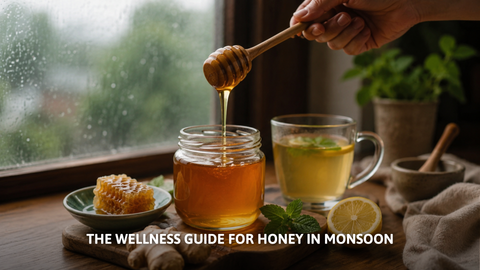
The arrival of the rainy season brings refreshing relief from summer heat, but it also introduces high atmospheric humidity, fluctuations in body temperature, and a rise in seasonal infections. Embracing a natural diet for rainy season care is one of the most effective ways to protect your family's health. Among nature’s finest remedies, pure, unprocessed raw honey stands out as a powerful dietary staple.
In this complete guide, you will discover the health benefits of honey in rainy season diets, best honey drinks for monsoon, and essential raw honey storage tips to protect pure honey from moisture and prevent fermentation
Why Use Honey for Monsoon Health & Wellness?
Incorporating honey for monsoon health into your daily routine provides vital nutrient support during months when immune defences can falter. High moisture levels in the air foster airborne bacteria and waterborne pathogens, making seasonal wellness routines essential.
1. Natural Immunity Support
Raw honey contains natural antioxidants, antibacterial compounds, and enzymes that support your body's immune system during seasonal transitions.
2. Soothing Throat Relief
The damp, cool air during rainy months frequently triggers throat tickles, dry coughs, and seasonal congestion. Honey's thick viscosity coats the throat, while its natural antimicrobial properties provide soothing relief.
3. Digestive Support
Humidity during monsoon can slow metabolic rates and trigger digestive sluggishness. Raw honey acts as a mild prebiotic, supporting healthy gut flora and smoother digestion when included in a balanced monsoon dietary routine

The Ayurvedic Perspective: How Raw Honey Balances Vata and Kapha in Monsoon
In Ayurveda, the monsoon season (Varsha Ritu) is known for disturbing the body's internal elemental balance (Doshas). The cold, damp, and windy nature of rainy weather causes an accumulation and aggravation of both Vata (air/ether) and Kapha (earth/water) doshas.
- Balancing Vata Dosha: Dampness and chilly winds weaken Agni (digestive fire) and increase Vata, leading to joint stiffness, dry coughs, and sluggish digestion. Raw honey has subtle warming (Ushna) qualities and grounding energy that calms aggravated Vata, helping retain warmth and mobility.
- Balancing Kapha Dosha: The heavy atmospheric humidity directly fuels Kapha dosha, causing excess mucus production, sinus congestion, lethargy, and chest heaviness. Unlike refined sugar, which aggravates Kapha, raw, unheated honey is considered Kaphahara (Kapha-pacifying). Its astringent (Kashaya) and scraping (Lekhana) properties help clear excess phlegm, reduce fluid retention, and scrape away accumulated toxins (Ama).
 Best Honey Drinks for Monsoon to Support Your Family's Seasonal Wellness
Starting your morning or unwinding in the evening with warm honey beverages is a soothing way to maintain daily vitality. Here are the top honey drinks for monsoon health to include in your household's routine:
| Drink Recipe | Key Ingredients | Main Benefits |
|---|---|---|
| Monsoon Warm Honey Water |
Warm water, 1 tbsp raw honey, dash of lemon juice | Hydrates, aids morning digestion, boosts metabolic rate. |
| Ayurvedic Herbal Kadha |
Tulsi leaves, ginger, black pepper, cinnamon, raw honey | Powerful immunity boost, clear respiratory tract, throat relief. |
| Golden Turmeric Honey Milk |
Warm milk (or plant milk), turmeric, black pepper, raw honey | Soothing evening drink, anti-inflammatory, aids restful sleep. |
| Ginger Honey Soother |
Fresh ginger extract, warm water, 1 tbsp raw honey | Ideal among soothing throat drinks for relieving tickles and coughs. |
 Daily Tip: Honey with Warm Water in Monsoon
Drinking honey with warm water in monsoon mornings helps cleanse the digestive tract and flush toxins accumulated overnight. Always ensure water is comfortably warm, never boiling, before stirring in your raw honey, as excessive heat can destroy delicate natural enzymes.
How to Store Raw Honey During Monsoon: A Complete Trust & Quality Guide
A common concern during rainy months is: Does honey spoil in the monsoon?
While pure, low-moisture honey never spoils under normal conditions, raw honey during the monsoon requires extra care due to ambient humidity.
Honey Fermentation & Atmospheric Humidity
Raw honey is hygroscopic, meaning it readily absorbs moisture directly from humid air. If left exposed to ambient air in the rainy season, honey can absorb excess water. When moisture levels inside the jar rise above 19–20%, naturally present wild yeasts can activate, leading to honey fermentation humidity issues. Fermented honey may develop a sour smell, small bubbles, or a foamy top layer.
Deep Dive into Hygroscopic Science: Fructose, Glucose & Atmospheric Moisture
To understand why raw honey acts like a moisture magnet during damp weather, we must look at its chemical sugar composition.
Raw honey consists primarily of simple sugars, roughly 38% fructose and 31% glucose dissolved in a low percentage of natural water (typically under 18%).
- The Role of Fructose: Fructose is exceptionally hygroscopic compared to other sugars. Its molecular structure binds strongly with water vapour molecules present in ambient air.
- The High Sugar-to-Water Gradient: Because raw honey contains a high concentration of dissolved sugars relative to its low water content, it creates a steep osmotic gradient. Whenever a jar of honey is left open in humid monsoon air (where relative humidity often exceeds 70–80%), the fructose actively pulls moisture out of the air into the top layer of the honey.
- Why the Fructose-to-Glucose Ratio Matters: Honeys higher in fructose stay liquid longer and absorb atmospheric moisture more aggressively than high-glucose honeys (which tend to crystallise fast). As this absorbed surface moisture dilutes the top layer of honey, wild osmotic-tolerant yeasts (Zygosaccharomyces) wake up and begin converting glucose and fructose into alcohol and carbon dioxide, causing natural fermentation
10 Essential Raw Honey Storage Tips & Protecting Pure Honey from Moisture
To maintain the quality, texture, and enzymatic value of your raw honey during rainy weather, follow these practical raw honey storage tips:
- Keep Containers Airtight: Always seal the lid tightly immediately after each use to prevent atmospheric moisture absorption.
- Use Glass or Food-Grade Stainless Steel: Store honey in clean glass jars or food-safe stainless steel containers rather than permeable plastic containers.
- Always Use a Dry Spoon: Never insert wet spoons into the jar. Even a single drop of water can trigger localised fermentation.
- Store in a Dark, Cool Pantry: Keep your honey in a cool, dry cupboard away from direct sunlight, open windows, and cooking steam.
- Do Not Refrigerate Raw Honey: Cold refrigeration temperatures accelerate natural crystallisation, turning liquid honey solid and grainy. Store at room temperature.
- Keep Away from Stovetops & Cooking Surfaces: Avoid storing honey near stoves, kettles, or dishwashers where steam and heat fluctuate frequently.
- Wipe Jar Rims Clean: Keep the inner rim and threads of the jar clean and dry so the cap creates a complete, moisture-proof air seal every time.
- Decant Small Quantities: Keep a small, tightly closed jar for daily cooking and beverages, leaving the primary main jar unopened and protected in storage.
- Gently Warm Crystallised Honey: If natural crystallisation occurs in cool weather, place the sealed glass jar in a bowl of warm water (under 40°C) to restore its smooth liquid texture.
- Buy Authentic Raw Unfiltered Honey: Pure, minimally processed honey with natural pollen and lower moisture content naturally resists spoilage better than adulterated or watered-down syrup blends.

Integrating honey water in rainy season habits alongside wholesome food choices strengthens your family's immunity throughout the wet months:
- Morning: Start with warm honey water or a warm honey-lemon drink on an empty stomach.
- Mid-Day: Pair seasonal fruits with a drizzle of pure raw honey for sustained afternoon energy.
- Evening: Sip ayurvedic monsoon drinks with honey, such as ginger-tulsi kadha or spiced warm honey tea, to keep respiratory passages clear
Conclusion
By adopting proper storage practices and protecting pure honey from moisture, you can enjoy all the natural wellness benefits of raw honey during the monsoon without worrying about spoilage or fermentation. Make raw honey drinks, warm herbal infusions, and wholesome dietary routines a central part of your home's monsoon health strategy this season!
FAQs
Q1. Does honey spoil in the rainy season?
Pure honey doesn't spoil, but it can absorb moisture from humid air and naturally ferment if left unsealed.
Q2. Is it safe to drink honey with warm water daily during the monsoon?
Yes, drinking honey with warm water helps soothe the throat, improves digestion, and naturally flushes out toxins accumulated overnight.
Q3. How should I store raw honey to prevent moisture absorption?
Store it in a tightly sealed glass or stainless steel jar in a cool, dark place away from direct sunlight and cooking steam.
Q4. Which type of honey is best for boosting immunity?
Raw, unfiltered honey is best as it retains all of its natural enzymes, antioxidants, and antibacterial properties.
Q5. Can honey help with a monsoon cough and cold?
Yes, honey's natural antimicrobial properties and thick texture can help coat the throat, soothe dry coughs, and relieve irritation.
Q6. Should I keep my honey in the refrigerator during damp weather?
No, refrigerating honey accelerates crystallization, making it grainy and solid. It is always best kept at room temperature.
Q7. Why does my honey smell sour during the monsoon?
If honey is exposed to high humidity, it absorbs excess moisture. This can cause naturally occurring wild yeasts to activate and ferment the honey, leading to a sour smell.