सामग्री पर जाएं

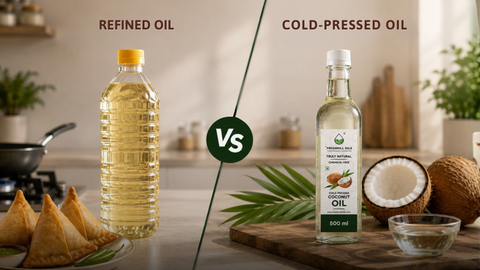
Walk into any supermarket today, and you will be greeted by rows of crystal-clear bottles promising light, heart-healthy cooking. For decades, mass-manufactured options dominated supermarket shelves, convincing families that clear, odourless liquid was the gold standard for daily cooking. But behind those glossy labels lies an intense industrial process that many health-conscious consumers are now beginning to question.
Choosing the right cooking medium for your family requires looking beyond clever marketing. Understanding the debate between refined oil vs cold pressed oil is essential if you want to make informed, health-focused choices for your home. This guide explains the exact difference between cold-pressed oil and refined oil, breaks down cooking oil extraction methods, and examines why traditional unrefined cooking oils are making a powerful comeback.
Understanding Cooking Oil Extraction Methods
To evaluate why cold-pressed oil is better than refined oil, we must first understand how both oils are produced. The fundamental contrast lies in the cooking oil extraction methods used by manufacturers.

Industrial refined oil production prioritises high yield, uniform appearance, and long shelf-life over nutritional value.
- Solvent Extraction: Oil seeds are crushed and treated with chemical solvents like hexane (a petroleum byproduct) to extract every last drop of fat.
- High Heat Treatment: The extracted oil is heated to extreme temperatures (often exceeding 200°C to 230°C).
- Degumming & Neutralisation: Chemicals such as phosphoric acid or sodium hydroxide are added to strip away natural gums and phosphatides.
- Bleaching & Deodorisation: The oil is bleached using fuller's earth/clays to remove natural dark colours, followed by high-vacuum steam deodorisation to erase natural aromas.
The Result: A pale, odourless, thin liquid stripped of natural vitamins, antioxidants, and the original seeds' character.
 2. The Cold-Pressed Process (Wooden Ghani / Chekku Method)
Cold pressing is an ancient, mechanical extraction technique that has been practised in India for centuries.
- Low Temperature Processing: Seeds or nuts are crushed slowly using a traditional wooden pestle and mortar (Kachi Ghani or Chekku). Friction generates minimal heat, keeping temperatures strictly below 45°C to 50°C.
- Zero Chemical Additives: No heat, chemical solvents, preservatives, or artificial refining agents are used.
- Simple Filtration: The extracted oil is allowed to settle naturally and filtered through clean cloth or physical screens.
The Result: Nutritious, pure, unrefined cooking oils that preserve the original seed’s natural colour, rich aroma, essential fatty acids, and micro-nutrients.
Key Differences: Refined Oil vs Cold-Pressed Oil
Examining the difference between cold-pressed oil and refined oil across vital quality parameters highlights clear distinctions:
| Parameter | Refined Oil | Cold Pressed Oil |
| Extraction Process | High heat + chemical solvent extraction (Hexane) | Mechanical wooden press (Ghani) at room temperature |
| Chemical Content | Bleached, neutralized, and deodorized with chemicals | 100% natural, chemical-free, and additive-free |
| Nutrient Preservation | Loss of natural antioxidants, Vitamin E, and minerals | Retains natural vitamins, phytosterols, & polyphenols |
| Trans Fats & Oxidants | High-heat processing creates trans fats and oxidants | Zero trans fats; preserved natural antioxidant structure |
| Aroma & Taste | Completely neutral, odorless, and flat | Distinct, authentic, nutty aroma and rich flavor profile |
| Purity Classification | Heavily processed fat | Natural unrefined cooking oils |
Why Cold-Pressed Oil is Better Than Refined Oil (Health Perspective)
From a clinical and nutritional standpoint, why cold pressed oil is better than refined oil comes down to molecular integrity. Here is how switching fats impacts your health:
1. Rich in Essential Antioxidants & Vitamin E
Because cold pressing avoids high thermal destruction, unrefined cooking oils retain high levels of natural Vitamin E, carotenoids, and polyphenols. These active antioxidants neutralize harmful free radicals in your body, reducing oxidative stress and cellular aging.
2. Free From Harmful Chemical Residues
Chemical solvent extraction leaves microscopic traces of petroleum derivatives like hexane in refined oil. Additionally, chemical bleaches and deodorizers degrade oil purity. Cold pressed oils guarantee zero exposure to industrial chemicals.
3. Prevention of Toxic Trans Fats
Exposing delicate unsaturated fatty acids to extreme heat during industrial refining alters their molecular bonds, converting healthy fats into harmful trans-fatty acids. Regular consumption of trans fats raises LDL ("bad") cholesterol, lowers HDL ("good") cholesterol, and increases systemic inflammation. Cold-pressed oils maintain their natural fatty acid structure without creating trans fats.
4. Heart Health & Healthy Cholesterol Ratios
Cold-pressed oils preserve beneficial Monounsaturated Fatty Acids (MUFA) and Poly-Unsaturated Fatty Acids (PUFA), along with plant sterols. Phytosterols block cholesterol absorption in the gut, helping maintain healthy blood pressure and protecting cardiovascular wellness.
5. Better Digestion & Gut Microbiome Support
Natural, unrefined cooking oils retain natural lecithin and bioactive compounds that support stomach mucosal lining and aid smooth digestion. In contrast, heavily processed refined oils can irritate the gut lining and trigger metabolic sluggishness.
Refined Oil vs Cold-Pressed Oil Benefits: At a Glance
Understanding refined oil vs cold-pressed oil benefits helps summarise why health experts advocate making the switch:
- 100% Pure & Natural: Cold-pressed oils contain no hidden synthetic anti-foaming agents or artificial antioxidants (like TBHQ or BHA).
- Superior Flavour Bio-Availability: Authentic food flavours are enhanced, requiring less oil overall for cooking.
- Sustained Energy Release: Unaltered Medium-Chain and Long-Chain Fatty Acids provide stable energy without causing metabolic spikes.
- Preserved Bioactive Compounds: Natural anti-inflammatory agents remain intact to support joint health and immunity.
Which is Better for Cooking and Why?
A common myth suggests that cold-pressed oils are unsuitable for cooking because of their lower smoke points. However, when analysing refined oil vs cold-pressed oil for everyday meals, cold-pressed oils often perform exceptionally well.
Heat Stability & Smoke Points in Indian Cooking
Indian cuisine involves diverse techniques, such as tempering (tadka), shallow frying, sautéing, and deep frying. Smoke point is the temperature at which oil stops shimmering and begins to burn, producing toxic acrolein and free radicals.
 Many traditional cold-pressed oils have naturally high smoke points that easily accommodate Indian cooking temperatures:
- Cold Pressed Mustard Oil: Smoke Point ~250°C (482°F)
- Cold Pressed Sesame / Gingelly Oil: Smoke Point ~210°C (410°F)
- Cold Pressed Groundnut (Peanut) Oil: Smoke Point ~160°C to 225°C (320°F–437°F)
- Cold Pressed Coconut Oil: Smoke Point ~177°C to 200°C (350°F–392°F)
Why Cold-Pressed Wins for Culinary Quality?
- Thermal Stability: Because cold-pressed oils retain natural antioxidants (like tocopherols), they resist thermal oxidation better than refined oils when heated within proper ranges.
- Authentic Flavour Enhancement: The natural nutty aroma of cold-pressed mustard, sesame, or coconut oil infuses dishes with a traditional taste that refined, odourless oils cannot replicate.
- Oil Absorption: Dishes cooked in genuine cold-pressed oils absorb less fat, leaving meals feeling lighter and less greasy.
Cooking Tip: Avoid reheating any oil repeatedly. Reheating breaks down fat molecules, generating toxic cyclic compounds regardless of whether the oil is refined or cold-pressed.
Popular Healthy Cooking Oils India Relies On
India’s traditional culinary geography wisely matched specific regional climates with native healthy cooking oils India produces best:

1. Cold Pressed Mustard Oil (Sarson ka Tel)
- Best For: North and East Indian cooking, tempering, pickles, and stir-fries.
- Health Highlights: High in Omega-3 and Omega-6 fatty acids, potent antimicrobial properties, and a high smoke point, perfect for deep frying.

2. Cold-pressed Sesame / Gingelly Oil (Til ka Tel)
- Best For: South Indian gravies, poriyals, curries, and dosa tempering.
- Health Highlights: Rich in sesamol and sesamolin antioxidants, supports bone health, lowers blood pressure, and provides a warming effect.

3. Cold-pressed Groundnut / Peanut Oil (Mungfali ka Tel)
- Best For: Daily frying, sautéing, snacks, and pan-Indian dishes.
- Health Highlights: Balanced blend of MUFA and PUFA, high in resveratrol (a heart-protective antioxidant), with a pleasing nutty flavour.

4. Cold Pressed Coconut Oil (Nariyal Tel)
- Best For: Coastal cooking, South Indian dishes, and low-to-medium heat sautéing.
- Health Highlights: Loaded with Lauric Acid and Medium-Chain Triglycerides (MCTs) that boost fat burning, energy, and gut immunity.

How to Choose and Store Unrefined Cooking Oils
Because unrefined cooking oils contain no artificial chemical preservatives, proper handling ensures freshness:
- Check the Label: Look for terms like "Wood Pressed," "Cold Pressed," "Kachi Ghani," or "Chekku." Ensure no solvent extraction or blending is mentioned.
- Look for Natural Viscosity & Colour: Genuine cold-pressed oil is slightly viscous, naturally rich in colour, and may have minor sediment at the bottom of the bottle.
- Storage: Store your oil in dark glass bottles or stainless steel containers, and keep it in a cool, pantry-like area away from direct sunlight and heat sources.
- Shelf Life: Fresh cold-pressed oils typically maintain peak quality for 6 to 12 months. Buy in smaller, fresh batches rather than bulk quantities.
Conclusion
When weighing refined oil vs cold pressed oil, the winner for long-term health and culinary richness is clear. While refined oils offer low cost and high thermal tolerance through heavy chemical processing, they strip away the essential nutrients your body needs.
By understanding the difference between cold-pressed oil and refined oil and evaluating cooking oil extraction methods, you can make a conscious shift back to nature. Switching to authentic, traditional, unrefined cooking oils like cold-pressed mustard, sesame, groundnut, or coconut oil guarantees that every spoon of fat nourishes your family with vital antioxidants, natural flavour, and robust heart protection.
FAQs
Q1. What is the main difference between refined oil and cold-pressed oil?
Refined oils are processed using high heat and chemical solvents, which strip away nutrients. Cold-pressed oils are extracted mechanically at low temperatures, retaining their natural antioxidants, vitamins, and healthy fats.
Q2. Can cold-pressed oils be used for everyday Indian cooking?
Yes, cold-pressed oils are excellent for daily cooking. Oils like mustard, groundnut, and sesame have high smoke points, making them perfect for sautéing, tempering (tadka), and traditional Indian recipes.
Q3. Is cold-pressed oil better for heart health than refined oil?
Yes. Cold-pressed oils preserve beneficial unsaturated fats and natural plant sterols, which support a healthier cholesterol balance. Refined oils can contain harmful trans fats and oxidized compounds due to high-heat processing.
Q4. Why are cold-pressed oils more expensive than refined oils?
Cold-pressed oils cost more because they are produced using slower mechanical methods that yield less oil per batch compared to industrial chemical extraction. They also contain zero cheap chemical additives, reflecting higher quality.
Q5. Can I use cold-pressed oils for deep frying?
Absolutely. Many traditional cold-pressed oils, such as groundnut (peanut) and mustard oil, have naturally high smoke points that can easily withstand the high temperatures required for deep frying.
Q6. How should I store cold-pressed oils at home?
To maintain their freshness and nutritional value, store cold-pressed oils in a cool, dry, and dark place away from direct sunlight. Always keep the bottle cap tightly closed after use.
Q7. Why does the colour and smell of cold-pressed oil sometimes vary?
Since cold-pressed oils are not chemically bleached or artificially deodorized, slight variations in colour and aroma are completely natural. These changes simply reflect the season, soil, and specific seed variety used in that batch.