सामग्री पर जाएं

🎁 Exclusive Reader Offer: Get 10% Off Storewide!
Loved learning about pure Ceylon Cinnamon? Upgrade your whole pantry! Get our authentic, low-coumarin Cinnamon and explore our entire range of natural goodness. Use code READER10 for 10% off your entire order.
Shop & Save 10%That fragrant jar of cinnamon sitting on your spice rack might be doing your health more harm than good. Millions of households add a pinch of Dalchini to their morning tea, smoothies, and daily meals, believing they are reaping powerful wellness benefits. But here is a surprising reality: up to 90% of the cinnamon sold in supermarkets isn't real cinnamon at all. Instead, it is a mass-market alternative called Cassia, which contains high levels of liver-taxing chemical compounds.
Understanding the true difference between cassia and Ceylon cinnamon is critical if you consume this spice regularly for its medicinal properties. While both look similar once ground into a fine powder, their origin, safety profile, and therapeutic value could not be more different.
This comprehensive guide explores true cinnamon vs cassia, the health risks of coumarin in cinnamon, the exceptional Ceylon cinnamon benefits, and practical tests on how to identify true Ceylon cinnamon so you can protect your family from fake Dalchini.
 What is Ceylon Cinnamon vs Cassia Cinnamon?
To evaluate dalchini pure vs fake, we must look at where these two distinct tree barks actually originate:
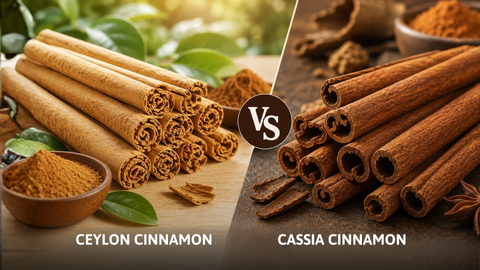
- Ceylon Cinnamon (Cinnamomum verum): Native to Sri Lanka and parts of southern India, Ceylon is officially recognised as "True Cinnamon." It is harvested from the soft inner bark of young trees, yielding delicate, paper-thin layers that are rolled together like a cigar. It offers a subtle, sweet, and refined aroma.
- Cassia Cinnamon (Cinnamomum cassia): Native to China, Indonesia, and Vietnam, Cassia is the cheap commercial variety found on most grocery shelves. Harvested from the thick outer bark of mature trees, Cassia forms a single, hard, dark brown scroll with a sharp, pungent, and slightly bitter flavour.
While Cassia is inexpensive to mass-produce, switching to pure Ceylon cinnamon is essential if you use cinnamon daily as a health supplement or culinary spice.
Key Differences: Ceylon Cinnamon vs Cassia
Comparing true cinnamon vs cassia side-by-side reveals sharp distinctions in texture, flavour, and chemical purity:
| Parameter | Ceylon Cinnamon (True Cinnamon) | Cassia Cinnamon (Common Commercial) |
|---|---|---|
| Botanical Name | Cinnamomum verum | Cinnamomum cassia / C. aromaticum |
| Origin | Sri Lanka (formerly Ceylon) & Southern India | China, Indonesia, Vietnam |
| Bark Appearance | Light tan-golden brown, delicate, paper-thin layers | Dark reddish-brown, thick, rough, single-layer quill |
| Cinnamon Bark Texture | Soft, papery, brittle; crumbles easily by hand | Rock-hard, dense, tough to break or crush |
| Flavor Profile | Delicate, mildly sweet, floral, and subtle | Pungent, intense, spicy, and slightly bitter |
| Coumarin Content | Ultra-low trace amounts (~0.004%) | High concentration (up to 1% or ~250x higher) |
| Health Safety | Safe for daily, long-term consumption | Potential risk of liver toxicity with daily use |
Coumarin in Cinnamon: Why It Matters for Your Health
The primary reason medical experts and nutritionists emphasise the difference between cassia and ceylon cinnamon comes down to a naturally occurring toxin called coumarin.
What is Coumarin?
Coumarin is an organic chemical compound found in plants that acts as a natural blood thinner. While harmless in tiny amounts, consuming high doses of coumarin over prolonged periods can trigger:
- Liver damage and hepatic toxicity
- Kidney strain and toxicity
- Dangerous interactions with prescription blood thinners
The Coumarin Gap
- Cassia Cinnamon contains up to 250 times more coumarin than Ceylon cinnamon. Just 1 to 2 teaspoons of ground Cassia cinnamon daily can easily exceed the European Food Safety Authority's (EFSA) Tolerable Daily Intake (TDI) for coumarin.
- Pure Ceylon Cinnamon contains only negligible, trace amounts of coumarin (~0.004%).
Health Takeaway: If you drink cinnamon water daily, take cinnamon supplements, or add cinnamon powder to morning oatmeal, switching to pure Ceylon cinnamon eliminates any risk of organ toxicity caused by excess coumarin in cinnamon.
Benefits of True Cinnamon: Why Ceylon Wins for Health
When evaluating what is better for health, Ceylon cinnamon benefits far outweigh those of common Cassia. The unique essential oil breakdown of Cinnamomum verum offers powerful therapeutic value:

One of the most celebrated benefits of true cinnamon is its ability to enhance insulin sensitivity. Bioactive compounds in Ceylon cinnamon mimic insulin, encouraging glucose uptake into cells and helping stabilise blood sugar levels after meals.
2. Powerful Antioxidant Protection
Pure Ceylon cinnamon is loaded with polyphenols and flavonoids. These potent antioxidants neutralise cellular free radicals, combat internal systemic inflammation, and slow premature cellular ageing.
3. Cardiovascular & Lipid Balance
Regular intake of Ceylon cinnamon sticks or powder helps reduce total cholesterol, triglycerides, and bad LDL cholesterol while leaving good HDL cholesterol intact. It also supports healthy arterial elasticity and blood pressure management.
4. Antimicrobial & Digestive Wellness
The natural essential oils in Ceylon cinnamon possess strong antibacterial, antifungal, and antiviral properties. It helps inhibit the growth of harmful gut bacteria like E. coli and Candida, supporting smooth digestion and gut immunity.
 Dalchini Pure vs Fake: How to Check Pure Cinnamon & Identify True Ceylon
1. The Cigar Layer Test (Quill Structure)
- Original Dalchini Stick (Ceylon): Look at the cross-section of the quill. An original dalchini stick made of Ceylon cinnamon has multiple soft, paper-thin layers tightly rolled together, resembling a hand-rolled cigar.
- Fake / Cassia Stick: Cassia quills consist of a single, thick, hard piece of bark that curls inward from both sides, forming a hollow double-scroll or thick tube.
2. Cinnamon Bark Texture & Hardness
- Ceylon Bark Texture: The cinnamon bark texture of Ceylon is thin, delicate, and soft. You can easily break or crush Ceylon cinnamon sticks between your fingers or grind them in a simple coffee grinder.
- Cassia Bark Texture: Cassia bark is rock-hard and woody. Trying to crush it with your hands is nearly impossible, and it can damage household blender blades.
3. Colour & Scent Comparison
- Pure Ceylon Cinnamon: Exhibits a light tan or warm honey-golden colour with a subtle, floral, and sweet aroma.
- Cassia / Fake Dalchini: Displays a dark reddish-brown hue with a sharp, pungent, spicy scent (similar to cinnamon chewing gum).
4. The Simple Iodine Test (For Ground Powder)
If you are testing ground cinnamon powder at home:
- Mix a pinch of cinnamon powder with water and boil it.
- Add a drop of tincture of iodine to the cooled liquid.
- Result: High-starch Cassia cinnamon turns deep blue/black, while pure Ceylon cinnamon retains its light brown hue or turns faintly blue.
Authentic Pure Ceylon Cinnamon
Don't risk your daily wellness with high-coumarin Cassia. Upgrade your pantry with our authentic, paper-thin Ceylon quills.
Shop Pure Ceylon Cinnamon Culinary Usage: How to Use Ceylon Cinnamon Sticks
Because Ceylon cinnamon has a mild, sweet flavour profile, it works exceptionally well in both sweet and delicate savoury dishes:
- Morning Wellness Water: Steep whole Ceylon cinnamon sticks in hot water overnight for a hydrating, insulin-balancing morning elixir.
- Teas & Coffee: Add an original dalchini stick to boiling chai, green tea, or black coffee for natural sweetness without added sugar.
- Baking & Desserts: Use ground pure Ceylon cinnamon in cakes, fruit pies, oatmeal, and pancakes where a smooth, refined aroma is desired.
- Light Indian Curries & Biryanis: Infuse soups, stews, and rice preparations with delicate Ceylon quills to enjoy Ceylon cinnamon benefits without overpowering the underlying spice blend.
Conclusion
When weighing true cinnamon vs cassia, Ceylon cinnamon emerges as the clear winner for long-term health, daily cooking, and safety. While Cassia offers an inexpensive option for heavy industrial baking, its high level of coumarin in cinnamon makes it unfit for regular wellness routines.
By understanding the difference between cassia and ceylon cinnamon, observing the fragile cinnamon bark texture, and checking for an original dalchini stick with layered cigar quills, you can protect your family from low-grade imitations. Investing in authentic, pure Ceylon cinnamon ensures every pinch of this golden spice delivers maximum flavour, safety, and vital health benefits.
Thanks for Reading! Enjoy 10% Off Your Entire Cart
As a thank you to our blog readers, we are offering a special storewide discount. Whether you are picking up our premium True Cinnamon or stocking up on other natural essentials, apply code READER10 at checkout for 10% off.
Explore All ProductsFAQs
Q1. What is the main difference between Ceylon and Cassia cinnamon?
Ceylon cinnamon, known as "true cinnamon," is grown primarily in Sri Lanka and has a delicate, sweet flavor with multiple soft bark layers. Cassia cinnamon is the common, cheaper variety found in supermarkets; it has a single, hard, woody layer and a sharper, spicier taste.
Q2. Why is Cassia cinnamon considered dangerous in large amounts?
Cassia cinnamon contains high levels of coumarin, a naturally occurring organic compound. Consuming high doses of coumarin over a long period can lead to liver damage and kidney strain.
Q3. Is Ceylon cinnamon safe for daily consumption?
Yes, Ceylon cinnamon is considered safe for daily use. It contains incredibly low, trace amounts of coumarin compared to Cassia, allowing you to enjoy its health benefits regularly without risking organ toxicity.
Q4. How can I tell if my cinnamon sticks are real Ceylon?
You can identify real Ceylon cinnamon sticks by examining the cross-section. Authentic Ceylon looks like a layered cigar with multiple paper-thin, easily crushable layers. Cassia sticks consist of a single, thick, hard piece of bark that is hollow inside.
Q5. Does true Ceylon cinnamon help regulate blood sugar?
Yes, active compounds in Ceylon cinnamon help enhance insulin sensitivity and stabilize blood sugar levels. Incorporating it into your diet can effectively support metabolic health and glucose management.
Q6. What does real Ceylon cinnamon taste like?
Real Ceylon cinnamon has a mild, citrusy-sweet, and complex flavor profile with floral notes. It is much more refined and subtle than the bold, pungent, and slightly bitter taste of common Cassia cinnamon.
Q7. How should I use Ceylon cinnamon in my daily routine?
Due to its smooth flavor, Ceylon cinnamon is excellent for both sweet and savory recipes. You can steep the sticks in hot water for morning tea, blend the powder into smoothies and oatmeal, or infuse it into light curries and desserts.