Skip to content

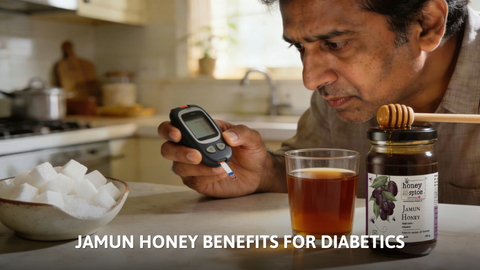
If you’re someone who keeps a close eye on your blood sugar, "honey" is usually a word that sets off alarm bells. We’ve been told for years that sugar is sugar, and while raw honey is better than the processed white stuff, it’s still a treat to be handled with extreme caution.
But what if there was a type of honey that actually worked with your body rather than against it?
Enter Jamun Honey. Let’s dive into what makes this unique nectar so special and why it might deserve a permanent spot in your pantry.
What Exactly is Jamun Honey?
Jamun honey isn't just regular honey flavoured with fruit. It is monofloral honey, meaning honeybees collect nectar specifically from the flowers of the Jamun tree (Syzygium cumini) during its brief flowering season.
Because it comes from the Jamun tree, a plant legendary in Ayurveda for managing "Prameha" (diabetes), the honey itself carries the essence of the tree's medicinal properties.

How to spot the real deal:
Colour: It’s much darker than your standard golden clover honey, often looking like a deep amber or dark brown.
Taste: It has a distinct "bittersweet" profile. You get that initial hit of natural sweetness followed by a slightly tart, earthy aftertaste.
Aroma: It smells like a walk through an orchard, rich, floral, and slightly spicy.
The Honey & Spice Difference: Sourced from the Wild
Not all Jamun honey is created equal. To get the medicinal benefits, the sourcing matters immensely. Honey & Spice sources their Jamun honey directly from the nectar-rich wild Jamun orchards and forest regions of Central India.
Unlike commercial honey that comes from bees kept on massive industrial farms, this is wild-harvested. The bees forage in natural forest environments, meaning the honey is free from the pesticides and chemicals often found in agricultural land.
Honey & Spice follows a "hive-to-bottle" philosophy:
- Raw & Unprocessed: Most supermarket honey is "ultra-filtered" and heated to high temperatures (pasteurised), which kills off the very enzymes and pollen that make honey healthy. Honey & Spice keeps it raw.
- Single-Origin: This isn't a blend of various honeys from different places. It is unifloral, meaning the bees focused almost exclusively on Jamun blossoms, concentrating those specific benefits.

The Benefits: More Than Just a Sweetener
While most people look at Jamun honey for blood sugar management, its benefits go way beyond that.
- A Powerhouse of Antioxidants: Like the dark fruit it originates from, Jamun honey is rich in anthocyanins and polyphenols. These help fight oxidative stress and inflammation in the body.
- Better Digestion: In traditional medicine, Jamun honey is used to alleviate stomachaches and bloating. It acts as a natural probiotic, supporting a healthy gut microbiome.
- Heart Health: Darker honey varieties are naturally richer in flavonoids, which help lower "bad" cholesterol and improve circulation.
Jamun Honey vs. Regular Raw Honey: The Diabetes Connection
This is the big question: Why should someone with diabetes choose Jamun honey over regular raw honey?
To be clear, honey still contains carbohydrates. However, Jamun honey is fundamentally different from the "Regular" honey you find on supermarket shelves for three key reasons:
1. The Glycemic Index (GI) Factor
Regular honey typically has a Glycemic Index ranging from 58 to 65. Jamun honey is known for having a lower Glycemic Index. This means it causes a slower, more gradual rise in blood sugar levels rather than the sharp spike associated with multi-floral honey or refined sugar.
2. Jamboline and Ellagic Acid
The Jamun plant contains two specific compounds: Jamboline and Ellagic Acid. These help prevent the conversion of starch into sugar. When bees collect nectar from Jamun blossoms, trace amounts of these compounds find their way into the honey, providing a unique metabolic advantage that standard honey simply doesn't have.
3. High Enzyme Content
Because Honey & Spice Jamun honey is raw and never heated, it remains rich in natural enzymes. For a diabetic, the goal is efficiency, helping the body process what it consumes without overtaxing the system. These enzymes make the honey easier for the body to break down.
How to Use It (The "Human" Way)
If you’re switching to Jamun honey, remember that it is potent. You don’t need much.
- In Tea: It pairs beautifully with green tea or Earl Grey. The slight bitterness of the honey complements the tannins in the tea perfectly.
- Morning Ritual: A teaspoon in lukewarm water with a squeeze of lemon is a classic way to kickstart your metabolism.
- Over Oats: Drizzle it over steel-cut oats with some walnuts. The earthy flavour profile is much more "sophisticated" than standard honey.

The Bottom Line (Conclusion)
Jamun honey is one of nature’s most functional foods. For those managing diabetes, it offers a way to enjoy the sweetness of life without the guilt or the dangerous glucose spikes, provided it’s consumed in moderation.
By choosing a wild-harvested, raw version like that from Honey & Spice, you're ensuring that the medicinal properties of the Central Indian forests make it all the way to your spoon
Disclaimer: While Jamun honey has a lower GI, it still contains sugar. If you have diabetes, always consult with your doctor or a nutritionist before making significant changes to your diet.
FAQs
Q1. Is Jamun honey good for diabetes?
Yes, Jamun honey has a lower Glycemic Index than regular honey, meaning it causes a slower, more gradual rise in blood sugar levels. It also contains bioactive compounds that help support insulin sensitivity and manage blood sugar, making it a better natural sweetener alternative.
Q2. How much Jamun honey can a diabetic safely take daily?
While it is a healthier alternative, it still contains carbohydrates. Most guidelines suggest keeping it to about half to one teaspoon per day, but you should always factor this into your daily carbohydrate budget and consult your doctor.
Q3. What makes Jamun honey different from regular honey?
Jamun honey is a monofloral honey collected predominantly from the blossoms of the Jamun tree. It is distinctively darker, has a slightly bittersweet taste, and retains the unique medicinal properties and lower glycemic index associated with the Jamun fruit.
Q4. When is the best time to consume Jamun honey?
For the best metabolic benefits, many people take a small amount of Jamun honey mixed in lukewarm water with lemon on an empty stomach in the morning. It can also be paired with fibre or protein to further slow glucose absorption.
Q5. Does Jamun honey spike blood sugar levels?
Yes, like all honey, it contains natural sugars that will raise blood glucose. However, the spike is typically much less severe and slower than the one caused by refined table sugar or regular multifloral honey.