Skip to content

When you walk into a wellness store or browse pure honey online, you are often greeted by a confusing array of labels. From Acacia and Jamun to Eucalyptus and Wild Forest, the options can feel endless. But among all the natural sweeteners available today, one variety stands out for its rich flavour, deep complexity, and unmatched nutritional diversity: multifloral honey.
If you have ever wondered what makes this polyfloral liquid gold so special, or how it compares to single-source varieties, you are in the right place. In this comprehensive guide, we will unpack the meaning of multiflora honey, explore the different types of multifloral honey, compare monofloral honey vs multifloral honey, and discover why it serves as an exceptional natural energy booster for your daily routine.
What is the Multifloral Honey? Decode the meaning?
To truly appreciate this jar of goodness, we first need to understand the multiflora honey meaning. In simple terms, multiflora honey (also known as polyfloral honey or wildflower honey) is honey crafted by honeybees that collect nectar from multiple flowers in a single region or ecosystem.
Unlike bees that are placed near a single, sprawling crop (like a mustard or clover field), wild honeybees producing multiflora honey roam freely across diverse landscapes, including dense forests, alpine meadows, and lush valleys. As they forage from dozens or even hundreds of blooming plants, trees, and wild blossoms, they blend the distinct nutrients, aromas, and botanical compounds from each bloom into a single batch.
When decoding the multiflora honey meaning, the key takeaway is biodiversity. Because bees gather nectar from multiple flowers, every batch of multi-flora honey carries a unique floral signature, reflecting the specific time of year, weather, and geographical flora of where it was harvested.

Monofloral Honey vs Multifloral Honey: What is the Difference?
When shopping for high-quality honey, the debate of monofloral honey vs multifloral honey frequently comes up. Understanding the nuances of single flora vs multi flora honey can help you pick the right jar for your health goals and taste preferences.
1. Source of Nectar
- Monofloral Honey (Single Flora): Produced when bees forage primarily on one dominant species of flower (e.g., Sidr, Jamun, Acacia, or Neem). Beekeepers achieve this by placing hives near a massive bloom of a single crop for a short period.
- Multifloral Honey (Multi Flora): Produced when bees collect nectar from multiple flowers growing wild in an area. There is no single dominant flower; instead, it is a harmonious blend of nature's diverse blooms.
2. Flavor and Aroma
- Single Flora Honey: Offers a specific, predictable taste profile. For example, Jamun honey has a distinctly bitter-sweet, herbal profile, while Acacia is mild and delicate.
- Multi Flora Honey: Delivers a complex, multi-layered taste experience. You might taste sweet floral notes, underlying woody undertones, and a subtle tangy finish all in one spoon, simply because it contains nectar from multiple flowers.
3. Nutrient Diversity
When comparing monofloral honey vs multifloral honey, nutrient density is a major factor:
- Monofloral varieties offer specialised benefits tied to the host plant.
- Multifloral varieties deliver a broad-spectrum blend of vitamins, minerals, enzymes, and diverse antioxidants gathered from various wildflowers, making them a comprehensive daily wellness companion.
Summary Comparison Table: Single Flora vs Multi Flora Honey
| Feature | Monofloral Honey (Single Flora) | Multifloral Honey (Multi Flora) |
|---|---|---|
| Nectar Source | Single dominant flower species | Nectar from multiple flowers & wild plants |
| Flavor Profile | Specific, uniform, and distinct | Complex, multi-layered, rich floral notes |
| Nutrient Spectrum | Focused on plant-specific compounds | Diverse range of antioxidants, enzymes & minerals |
| Harvest Method | Controlled seasonal farm placement | Wild-harvested or multi-crop foraging |
| Primary Use | Specific flavour pairings / targeted remedies | Daily health, culinary versatility & natural energy booster |
Why Multifloral Honey is the Ultimate Natural Energy Booster
In today’s fast-paced world, relying on processed energy drinks, caffeine, or refined sugar shots can lead to severe energy crashes and jitteriness. If you are looking for a clean, sustained vitality source, raw multifloral honey is the ideal natural energy booster.
Here is why adding a spoonful of multi-flora honey to your daily routine works as a superior natural energy booster:
- Balanced Carbohydrate Matrix: Multifloral honey naturally consists of roughly 80% unrefined sugars, primarily fructose and glucose. Glucose gives your body an instant physical pick-me-up, while fructose absorbs more slowly, providing sustained stamina without spiking your blood glucose uncontrollably.
- Rich Enzyme and Micronutrient Profile: Because bees gather nectar from multiple flowers, multifloral honey contains a broad blend of B-complex vitamins, iron, magnesium, potassium, and active enzymes. These micronutrients help your body efficiently convert food into cellular energy (ATP).
- Pre-Workout Stamina: Taking a tablespoon of multi-flora honey diluted in warm water before exercise acts as a bioavailable natural energy booster, fueling your muscles and delaying fatigue naturally.
- Combats Brain Fog and Fatigue: The combination of natural carbohydrates and plant antioxidants supports brain function, making it an excellent afternoon natural energy booster when energy levels dip at work.
Single Flora vs Multi Flora Honey: Which One Should You Choose?
When deciding between single-flora vs. multi-flora honey, consider your specific lifestyle needs:
- Choose Single Flora Honey if: You are looking for a very specific flavour profile (like mild Acacia for delicate herbal teas) or target remedies (like Jamun for blood sugar management).
- Choose Multi Flora Honey if: You want a versatile, everyday honey for your whole family. When comparing monofloral honey vs multifloral honey, multifloral honey offers greater overall antioxidant diversity, works wonderfully in everyday cooking, and serves as an affordable, effective natural energy booster.
In truth, keeping both in your pantry gives you the best of both worlds!
How to Enjoy Multifloral Honey Daily
Incorporating this natural energy booster into your lifestyle is easy and delicious. Here are a few practical ways to enjoy it:
- Morning Detox Drink: Mix 1 tablespoon of raw multifloral honey with warm water and a squeeze of fresh lemon juice on an empty stomach to fire up your metabolism.
- Pre-Workout Shot: Consume a teaspoon of raw multi-flora honey, 15–20 minutes before heading to the gym for clean athletic endurance.
- Nutritious Breakfast Topper: Drizzle it over oatmeal, yoghurt, whole-grain toast, or smoothie bowls.
- Natural Salad Dressings: Whisk raw multifloral honey with extra virgin olive oil, apple cider vinegar, and black pepper for a wholesome salad dressing.
- Herbal Tea Sweetener: Stir a spoon into warm chamomile, green, or ginger tea (ensure the tea is warm, not boiling, to protect active enzymes).

Types of Multifloral Honey Across Different Regions
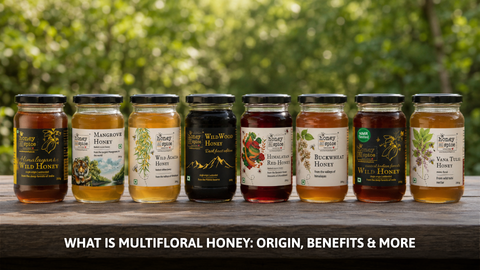
Because multi-floral honey relies on regional vegetation, the types of multifloral honey available on the market vary dramatically based on location, elevation, and season. At Honey & Spice, we bring you all of this wild, region-specific diversity under one platform, sourcing pure, unpasteurized honey directly from ethical tribal harvesters and pristine ecosystems across India.
Here is a curated list of multifloral honey varieties that highlight the incredible diversity of polyfloral honey:

- Origin: Harvested sustainably by tribal communities from the dense, pristine forests of the Western Ghats across Tamil Nadu, Karnataka, and Kerala.
- Benefits: Light amber with a sweet, fruity, and slightly tangy flavour profile. Packed with natural enzymes and prebiotics that support smooth digestion, boost daily immunity, and deeply hydrate the skin.

- Origin: Carefully collected from wild beehives (Apis Dorsata) located high on trees and cliffs in the Himalayan foothills around Jim Corbett National Park and nearby regions.
- Benefits: Dark amber with a bold, earthy flavour and waxy floral undertones. High in forest antioxidants, it is an excellent natural remedy for soothing upper respiratory colds and coughs, enhancing metabolic immunity, and providing clean, sustained energy.

- Origin: Sourced from deep inside the wild forests of Chhattisgarh and Madhya Pradesh through a partnership with local tribal honey harvesters and the World Wide Fund for Nature (WWF).
- Benefits: 100% NMR-tested to ensure zero adulteration. Revered in Ayurveda for its high medicinal value, rich mineral content, and anti-inflammatory polyphenols that aid gut health, respiratory relief, and overall vitality.

- Origin: Harvested from wild beehives in the remote, UNESCO-protected mangrove forests of the Sundarbans delta near the Bay of Bengal.
- Benefits: Features a bold, earthy, and unique salty-sweet flavour profile derived from mangrove flora, such as Khalisa and Gewa. Rich in rare coastal botanical antioxidants and strong antimicrobial compounds that fight infections and protect against cellular stress.

- Origin: Gathered from natural cliffs and tree hives situated in the undisturbed mountain ranges and deep forests of the Eastern Ghats.
- Benefits: Multi-floral nectar source providing a rich blend of micro-minerals and natural pollen. Promotes gut microbiome balance, improves digestive efficiency, and provides an immediate natural boost in physical stamina.

- Origin: Sourced from ancient, dense timber woodlands and shaded forest canopies where wild bees forage on tree saps and dark forest blossoms.
- Benefits: An exceptionally dark, mineral-rich honey high in bioavailable iron, magnesium, and potassium. Delivers powerful anti-inflammatory and cellular repair benefits, making it great for skin rejuvenation and joint health.

- Origin: Collected from wild Acacia groves blooming naturally across wild forest ecosystems.
- Benefits: Light in colour with a delicate, mild sweetness and slow crystallisation rate. Extremely gentle on sensitive stomachs, aids in liver detoxification, and serves as an ideal low-glycemic natural sweetener.

- Origin: Gathered from wild-growing Holy Basil (Vana Tulsi) patches found in uncultivated forest areas.
- Benefits: Naturally carries the botanical properties of wild basil. Renowned in Ayurvedic wellness for easing Kapha-related imbalances, relieving sinus congestion, soothing throat irritation, and building seasonal immunity.

- Origin: Harvested from high-altitude cliff hives nestled deep within remote Himalayan mountain valleys.
- Benefits: Rare and potent wild honey variety packed with unique mountain phytocompounds. Known for boosting cardiovascular vitality, enhancing physical stamina, and offering robust cellular defense.

- Origin: Sourced from the cold, high-altitude valleys and high-desert regions where buckwheat blossoms naturally during late summer.
- Benefits: Distinctly dark and rich in iron and polyphenols, making it a powerful remedy for soothing severe coughs, boosting red blood cell production, and combating oxidative stress.

- Origin: Harvested from native woodland patches and small forest belts surrounding rural countryside villages and mountain foothills.
- Benefits: A well-balanced polyfloral honey rich in local wild pollen, making it an excellent natural remedy for building immunity against regional seasonal allergies while supporting smooth daily digestion.
Key Highlights of Honey & Spice Wild Forest Honeys
- 100% Raw & Unprocessed: Never heated above 45°C or ultra-filtered, preserving active enzymes, natural pollen, and antioxidants.
- Ethical & Sustainable: Sourced in partnership with traditional tribal honey hunters trained in sustainable, bee-safe harvesting practices.
- Explore Our Diverse Collection: From the high cliffs of the Himalayas to the dense Western Ghats and Sundarbans mangroves, explore our full range of regional, wild-harvested honeys on the Honey & Spice Honey Collection page to find the perfect jar for your wellness routine.
Final Thoughts
Understanding the multiflora honey meaning helps us appreciate the extraordinary effort bees put into collecting nectar from multiple flowers. From exploring the diverse types of multifloral honey on our list of multifloral honey to weighing monofloral honey vs multifloral honey, it is clear that multifloral honey is one of nature’s most complete and versatile superfoods.
Whether you need a clean natural energy booster before a workout, an immunity aid for seasonal changes, or a delicious natural sweetener, raw multifloral honey brings the vibrant essence of wild nature straight to your kitchen table.
Disclaimer: This article is for educational and informational purposes only and does not replace professional medical advice. Always consult your doctor or nutritionist before making significant changes to your diet.
FAQs
Q1. What is multifloral honey?
Multifloral honey, also known as wildflower honey, is made by bees that collect nectar from various types of flowers in a single region, resulting in a unique and complex flavor profile.
Q2. What are the main benefits of multifloral honey?
It is rich in diverse antioxidants, vitamins, and minerals. It serves as a natural energy booster, aids in digestion, and provides immune system support due to the wide variety of plant nectars it contains.
Q3. Is monofloral or multifloral honey better?
Neither is strictly better; it depends on your needs. Monofloral honey is great for targeted remedies and specific flavors, while multifloral honey offers broader nutritional diversity and a complex taste ideal for everyday use.
Q4. Can I use multifloral honey every day?
Yes, incorporating a spoonful of raw multifloral honey into your daily routine is safe and highly beneficial. It works perfectly in tea, on top of breakfast bowls, or as a pre-workout natural energy source.
Q5. Why does the color of multifloral honey change?
The color and flavor of multifloral honey change naturally based on the specific seasons, weather, and wild blooms available in the region where the bees are foraging.
Q6. Does raw multifloral honey crystallize?
Yes, raw and unprocessed honey will naturally crystallize over time. This is a sign of purity and preserves the honey's natural enzymes and nutrients without affecting its quality.
Q7. How should I store multifloral honey?
You should store it in a cool, dry place away from direct sunlight. There is no need to refrigerate honey, as cold temperatures will cause it to crystallize much faster.